IPTV
Prison Electronic Education Solution
Television education systems, electronic notice boards, and prison affairs disclosure systems within the digital transformation of prisons can all be integrated into the digital television education system.
Scheme Overview

The Prison IPTV Educational Solution is a specialised system tailored to prison management requirements, centred on educational rehabilitation, security management, and humanistic care. Employing a three-tier architecture of ‘core layer + aggregation layer + access layer’, it integrates hardware and software to operate via a local area network, achieving physical isolation and hierarchical access control. The system features content management, terminal control, and integration capabilities with existing systems, incorporating stringent security mechanisms. It delivers services such as legal education and vocational training, enhancing management efficiency, supporting inmate rehabilitation, and maintaining institutional stability.

System Functional Modules
Virtual Carousel Channel
Video recording
Educational On-Demand
Courseware-based teaching
Information Announcement
Virtual Carousel Channel
On-demand educational media resources may be categorised and compiled into independent virtual live channels, with the capability for rotational playback.
Video recording
The system can automatically record designated live channels and automatically import the recordings into on-demand educational resources for playback.
Educational On-Demand
Through video-based instruction, comprehensive education enables inmates to balance work and study effectively, thereby eliminating ideological issues among the prison population.
Courseware-based teaching
The system supports reading and learning from content books, including legal regulations, skills training materials, and e-books.
Information Announcement
Publish news in text and image format for inmates to view; different terminal types display distinct video and graphic content; the addition, deletion, and editing of video and graphic materials are managed through the backend configuration management system.
Smart Prison Video Conferencing and Interactive System Solution: Overall Advantages
Strict content control to ensure educational safety
Content must undergo multi-tiered review (e.g., by prison management and education departments) before publication to ensure compliance with laws and regulations, as well as rehabilitation objectives (such as legal knowledge, ideological education, and skills training). Support for content encryption and access isolation prevents inmates from tampering with, uploading, or accessing unauthorised external materials, thereby safeguarding the integrity of educational content.
Precision-targeted education to enhance the effectiveness of transformation initiatives
Targeted content delivery by zone/group: Tailor content distribution based on prison ward, inmate category (e.g., juvenile offenders, first-time offenders, repeat offenders), and rehabilitation needs (e.g., legal literacy, vocational skills, psychological counselling). For instance, prioritise employment skills courses for inmates nearing release. Personalised learning pathways: Recommend suitable educational content aligned with inmates' assessment outcomes and interests to enhance engagement and acceptance.
Technologically flexible and scalable, adapted to complex prison environments
Utilising existing network cabling (such as fibre optic and Ethernet cables) for expansion eliminates the need for extensive rewiring, thereby reducing installation complexity. Support for multi-terminal access (including cell televisions, public area display screens, and management computers) ensures comprehensive coverage of all educational scenarios.
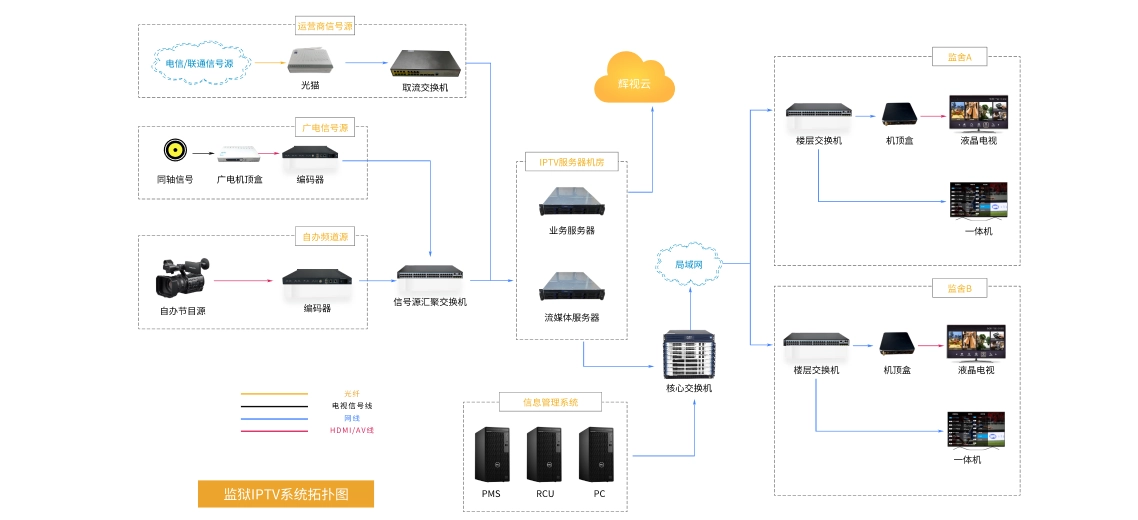
Schematic Diagram
Smart Prison Application Scenarios
Legal Ideological Education
  • Legal Literacy Promotion

    1. Targeted broadcasts of interpretations of legal provisions (e.g., Criminal Law, Prison Law), analysis of typical cases, and lectures by legal experts.


    2. Assisting inmates in clarifying the legal consequences of their actions and understanding the necessity of ‘law-abiding behaviour’.

  • Ideological and Moral Education

    1. Dissemination of core socialist values and traditional culture (e.g., filial piety, integrity).


    2. Red education documentaries and related content, combined with regular prison-organised group viewings and discussions, to guide inmates in establishing correct values.

  • Policy Interpretation

    1. Timely broadcast of national judicial policies and prison management regulations (e.g., scoring assessment methods, remission and parole policies).


    2. Ensure inmates clearly understand rehabilitation rules, enhancing their proactive engagement in rehabilitation.

Vocational skills training
  • Standardised Course Delivery

    1. Provide foundational instructional videos for vocational skills including electrical work, welding, domestic services, and e-commerce operations;


    2. Integrate with offline practical training to establish a ‘theory + practice’ training framework.

  • Employment Guidance Provision

    1. Cover knowledge such as CV preparation, interview techniques, and labour rights protection.


    2. Assists inmates in preparing for societal reintegration into the employment environment.

  • Skill Enhancement Supplement

    1. Launches introductory modules for emerging industries (e.g., short video production, livestreaming commerce fundamentals).


    2. Broadens inmates' employment prospects and enhances post-release employability.

Mental Health Guidance
  • Psychological Counselling Content

    1. Broadcast pre-recorded sessions by counsellors covering emotion management, stress relief, and interpersonal relationship handling.


    2. Analyse case studies illustrating common psychological challenges among inmates and corresponding coping strategies.

  • Health Knowledge Dissemination

    1. Distribute content on physical health (e.g., infectious disease prevention, chronic condition management) and lifestyle habit cultivation (e.g., balanced nutrition, exercise).


    2. Complementing in-person services from prison medical departments to enhance inmates' physical and mental wellbeing.

  • Family Relationship Restoration Guidance

    1. Launching online videos on family communication techniques and maintaining parent-child bonds to help inmates improve familial relationships and strengthen emotional motivation for rehabilitation.

Prison Information Management
  • Instant Notification Alerts

    1. Such as schedule adjustments, visitation arrangements, supply distributions, and group activity announcements.


    2. Through targeted regional push notifications, ensuring comprehensive coverage without omission. This proves more timely and accessible than traditional noticeboards.

  • Rehabilitation Progress Updates

    1. Regular publication of inmates' scoring assessments and reward information;


    2. An open and transparent mechanism incentivises inmates to actively engage in rehabilitation.

  • Behavioural Standards Reinforcement

    1. Continuous looping of prison regulations interpretations and cautionary case studies of disciplinary violations (e.g., consequences of fighting or escape attempts).


    2. High-frequency visual impact reinforces inmates' awareness of institutional rules.

Cultural and Recreational Guidance
  • Compliance-approved content

    1. Such as revolutionary films, uplifting television dramas, and documentaries (covering history and natural sciences).


    2. Interpretations of classic literary works, etc., avoiding vulgar, violent, or inflammatory material.

  • Festival-themed content

    1. During traditional festivals like the Spring Festival and Mid-Autumn Festival, promote cultural introductions and family message videos (subject to review).


    2. Alleviate inmates' homesickness through humanistic care, bolstering their confidence in rehabilitation.

  • Interest Cultivation Content

    1. Launch introductory art tutorials on calligraphy, painting, and musical instruments to enrich inmates' spiritual lives and foster wholesome hobbies.

Emergency Awareness Training
  • Emergency Procedure Demonstration

    1. Play safety training videos covering fire evacuation, crowd control, and emergency response protocols.


    2. Regularly organise inmates to view these materials and participate in drills to enhance emergency response capabilities.

  • Emergency Notification Triggering

    1. During unforeseen incidents, the system can forcibly switch all terminals to an emergency channel, broadcasting real-time instructions (e.g., evacuation routes, assembly points) to maintain order within the facility.

  • Safety Awareness Enhancement

    1. Continuously broadcast analyses of safety incident case studies and prison safety precautions to strengthen inmates' safety awareness and self-protection capabilities.

IPTV System Deployment

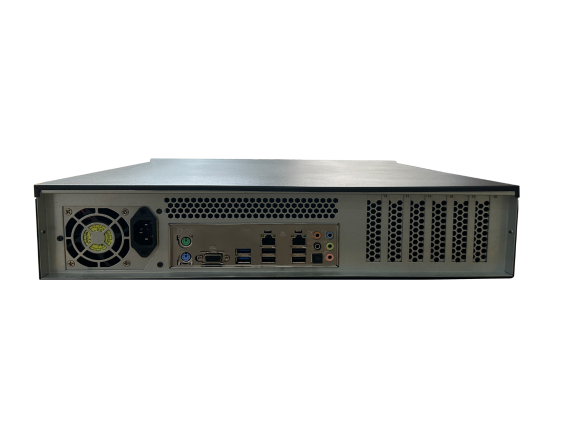
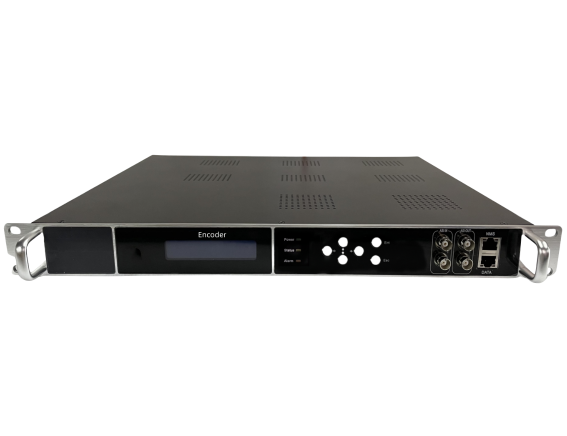
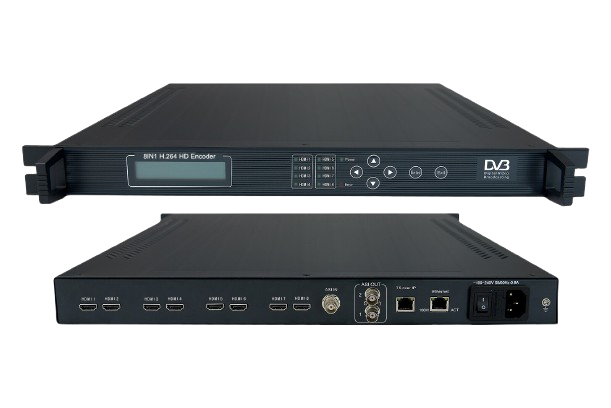
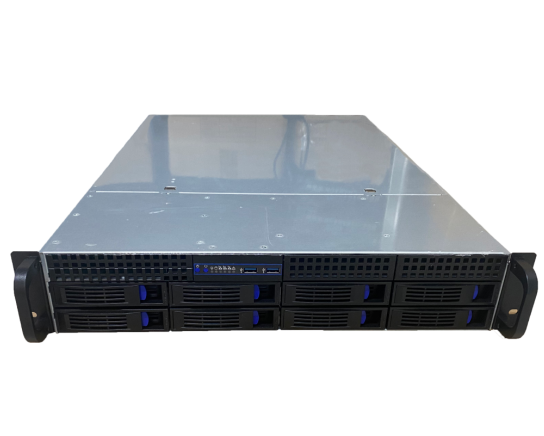
Core Server Cluster: Content Management Server stores content such as legal and skills materials, delivering targeted pushes according to prison block schedules; Streaming Media Server supports 1080P HD transcoding, with single-server capacity ≥500 concurrent terminals; User Management Server interfaces with the inmate information database; Log Audit Server records operations, retaining logs for ≥180 days with full traceability.

Contact Us
Core Level (Prison Command Centre)

Aggregation nodes shall be deployed per prison block, with one gigabit-class aggregation switch installed in each block. These switches shall connect the core layer to the access layer, handling the aggregation and forwarding of terminal traffic within their respective blocks.

Deploy local cache servers: Cache frequently broadcast content within the prison block (such as daily news and block announcements) to reduce core server load and enhance playback smoothness.

Contact Us
Aggregation Layer (Ward Computer Room)

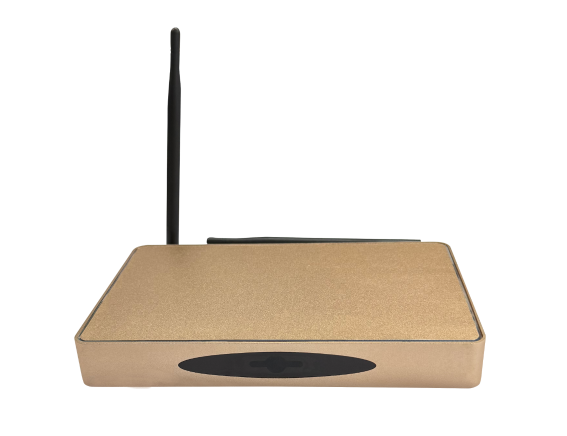
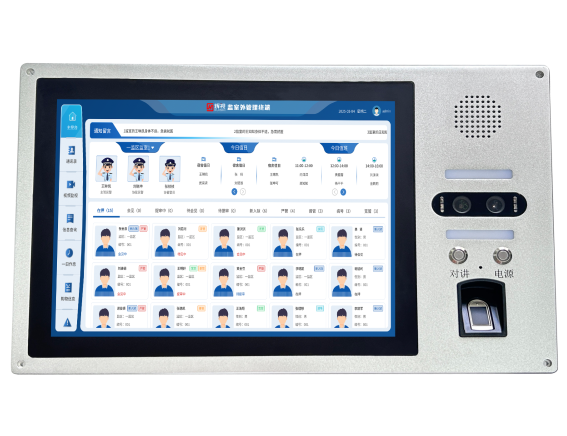
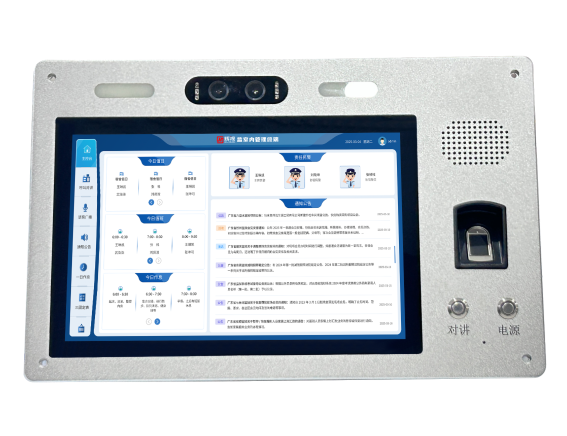
Terminal Equipment Deployment: Cell Terminal: Customised IPTV set-top boxes (without USB/HDMI ports, secured with tamper-proof screws) connected to cell televisions, supporting remote power control and volume lock (to prevent noise disturbance).

Public Area Terminals: Large-screen displays (≥55 inches) deployed in activity rooms and educational halls, paired with high-performance set-top boxes, supporting simultaneous viewing by multiple individuals.

Access Switches: One Gigabit access switch deployed per floor, utilising POE power supply (for selected terminals) to reduce cable redundancy and facilitate maintenance.

Contact Us
Access Layer (Cell Blocks / Common Areas)
Network architecture: Pure local area network (LAN) architecture (TCP/IP protocol), not connected to the internet. The core layer and aggregation layer utilise fibre optic connections (transmission rate ≥10Gbps), while the aggregation layer to access layer employs Category 5e network cables (rate ≥1Gbps).
Contact Us
Network Architecture Design

Content Management Platform: Deployed on core servers, supporting upload and transcoding of formats including MP4/TS, subject to tiered review by the Education Section and Prison Administration Section. Capable of scheduling playlists for specific time slots, with support for emergency broadcasts.

Terminal and Integration Management: Enables remote batch control of terminal power cycling, channel locking, and other functions, with content distribution grouped by detention area. Integrates via API with the inmate database, surveillance systems, and emergency protocols to facilitate targeted content delivery and emergency switching.

Contact Us
Software platform deployment

The server room employs dual authentication access via fingerprint and password, equipped with climate-controlled air conditioning and an uninterruptible power supply (UPS) ensuring 30 minutes of normal operation following a power failure.

Terminal devices feature casings with no exposed ports, while remote controls retain only ‘power’ and ‘volume’ buttons (channel-changing functionality removed) to prevent tampering or damage by inmates.

Contact Us
Deployment of security mechanisms