Information Release Solutions
Focusing on personalised requirements and team collaboration efficiency
Solution Overview
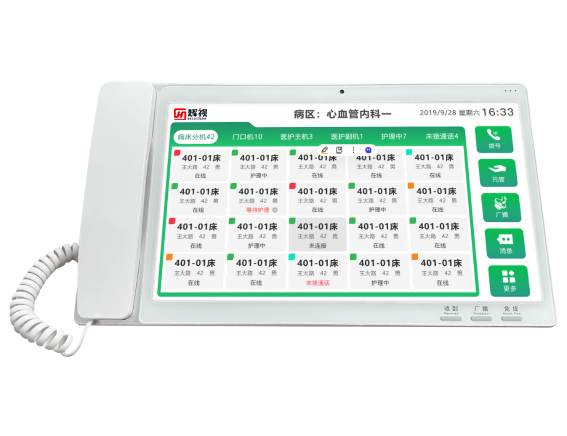
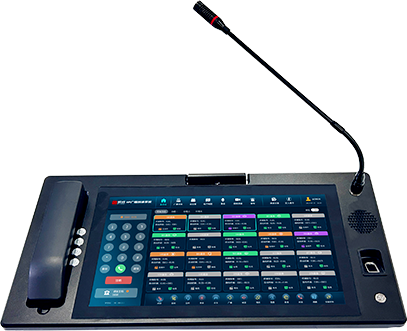
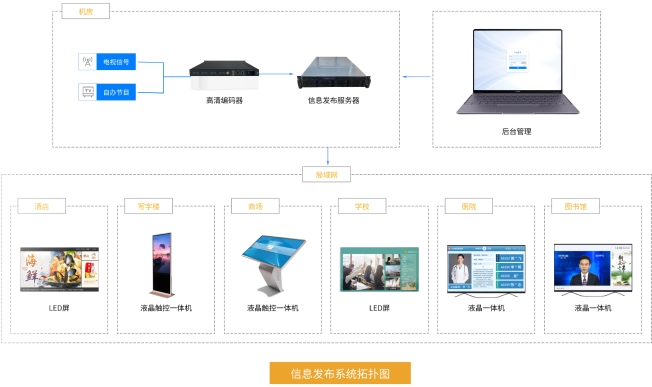
The Huishi Multimedia Information Display System operates over networked (LAN/wireless) environments, integrating hardware and software to disseminate text, graphics, audio and video content. It interfaces with third-party data sources for automated updates and interactive functionality. The system centrally manages terminal display devices, combining interactive on-demand services, information publishing and live video streaming management into a unified platform, delivering comprehensive audiovisual services to diverse user groups.
Solution Features
  • Content offline caching
    Supports seamless switching between online and offline modes. In the event of network disruption, multimedia publishing terminals automatically play emergency programming.
  • Dynamic Layout
    On the same display screen, it supports the design of multiple distinct elements to be played within specific designated areas.
  • Scheduled power on/off
    Remotely set the daily switch-on and switch-off times for television terminals; the television will automatically switch on and off at the designated times.
  • Equipment Visualisation Management
    Equipped with monitoring capabilities, enabling real-time viewing of device operational status, terminal online status, and current playback content.
  • Cloud/On-premises deployment
    Supports cloud deployment/on-premises server deployment.
  • Content synchronised playback
    Content played simultaneously across all terminals achieves millisecond-level synchronisation, supporting the display and playback of various multimedia elements.
  • Airport
    Through terminal screens, public address systems and mobile applications, real-time updates on flight status, gate changes and weather advisories are provided to facilitate efficient passenger travel.
  • Hospital
    Utilising guidance screens and queue management systems, we display departmental information, waiting times, and doctor availability schedules to facilitate patient consultations.
  • underground station
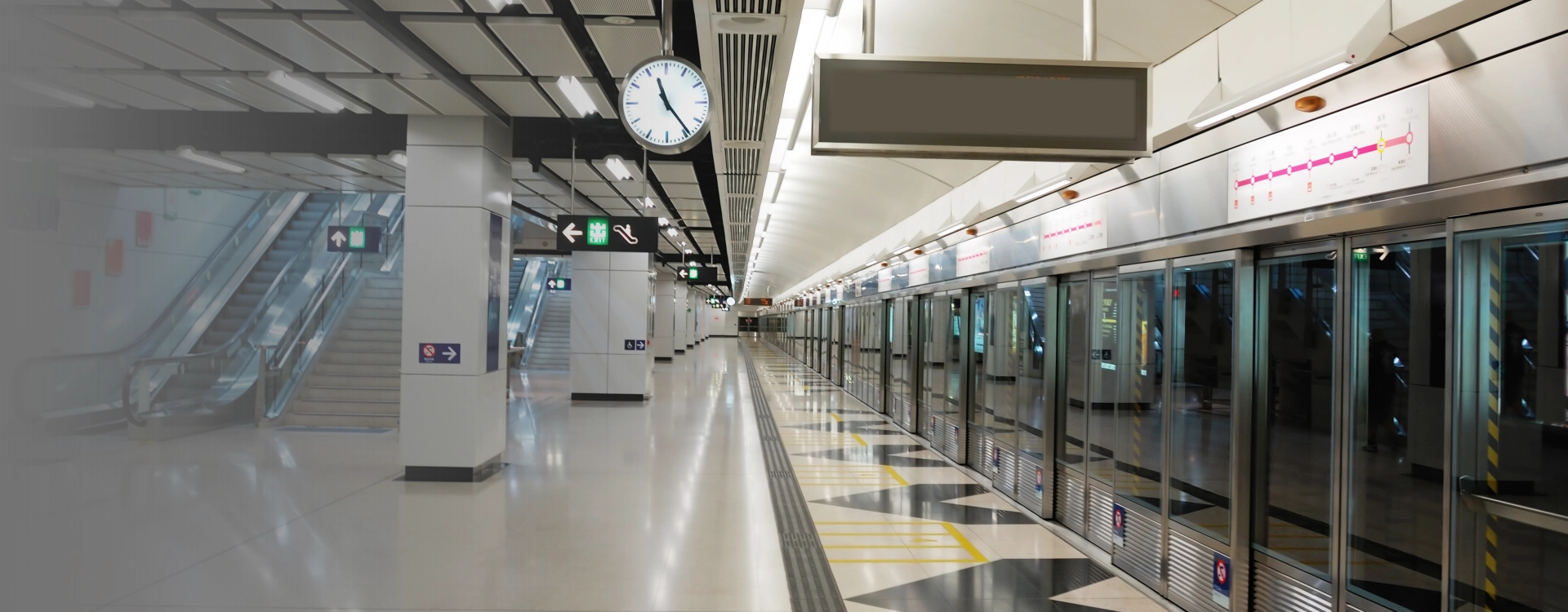
    Utilising platform displays and carriage announcements, real-time updates on train arrivals, interchange information and operational adjustments are provided to ensure passenger flow.
  • Government departments
    Through official websites and notice boards, publish policy documents, administrative guides, and public notices to ensure transparency in government affairs.
  • Nursing home
    Utilise notice boards and carer communications to disseminate activity schedules, dietary information, and health advisories, thereby ensuring the well-being of our residents.
  • military unit
    Through internal systems and noticeboards, issue command notifications, training schedules, and disciplinary requirements to ensure the smooth flow of directives.
Information Release Process
The information release process is clear and straightforward: First, log in to the platform using your account credentials; Then edit and refine the text content, ensuring the format is standardised for visual appeal; Next, select the target audience, region, and terminal device, preview the output, and submit for review; Once approved, publish with a single click to effortlessly complete the information push.
  • Login Platform
    Log in to the system using your account credentials.
  • Content Editor
    Text material, edited and refined
  • Select publication scope
    Designated Audience Area Terminal
  • Format adjustment
    Standardise the format, achieving aesthetic perfection
  • Preview review
    Preview the effect before publishing, submit for review
  • One-click publishing
    Once approved, click publish.
Advantages of the Information Release System Solution
Intelligent deployment
Multi-device compatibility
Security safeguards
Flexible customisation
Precise data
Intelligent deployment
  • Intelligent and efficient, rapid deployment

    Utilising proprietary core algorithms, it supports one-click rapid deployment, enabling system launch within 10 minutes. The distributed architecture ensures millisecond-level response for vast numbers of terminal devices. Whether synchronising content across a single screen or thousands, it achieves zero-delay, precise delivery, significantly enhancing information dissemination efficiency.

Multi-device compatibility
  • Multi-device compatibility, seamless adaptation

    Deeply compatible with mainstream operating systems including Android, Windows, and Linux, it adapts to all display terminals such as LED screens, LCD screens, and touchscreen all-in-one devices. Breaking down device barriers, it supports unified cross-platform management without requiring additional adaptation development, enabling effortless construction of a comprehensive information publishing network across all scenarios.

Security safeguards
  • Safety and stability, reliable assurance

    Featuring bank-grade data encryption for transmission and storage, combined with a multi-tiered permission management system, it rigorously prevents information leaks and unauthorised operations. With 24/7 system health monitoring and automated disaster recovery backups, it ensures year-round stable operation, achieving an average fault recovery time of less than 30 minutes.

Flexible customisation
  • Flexible customisation, boundless creativity

    The visual editing interface supports free drag-and-drop functionality and split-screen combinations, enabling customisation of diverse presentation formats including graphics, videos, and live streams to suit varying scenario requirements. The dynamic template library encompasses commercial advertising, government publicity, corporate announcements, and other industry-wide scenarios, fulfilling personalised content display needs.

Precise data
  • Precision targeting, data-driven

    Integrated with an intelligent AI analytics engine, it enables precise information delivery based on multi-dimensional criteria such as time periods, geographical locations, and audience profiles. Real-time data dashboards provide intuitive visualisation of core metrics including broadcast performance and click-through conversion rates. By leveraging big data analytics to refine deployment strategies, it maximises the value of information dissemination.