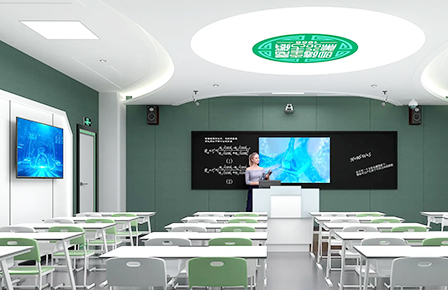
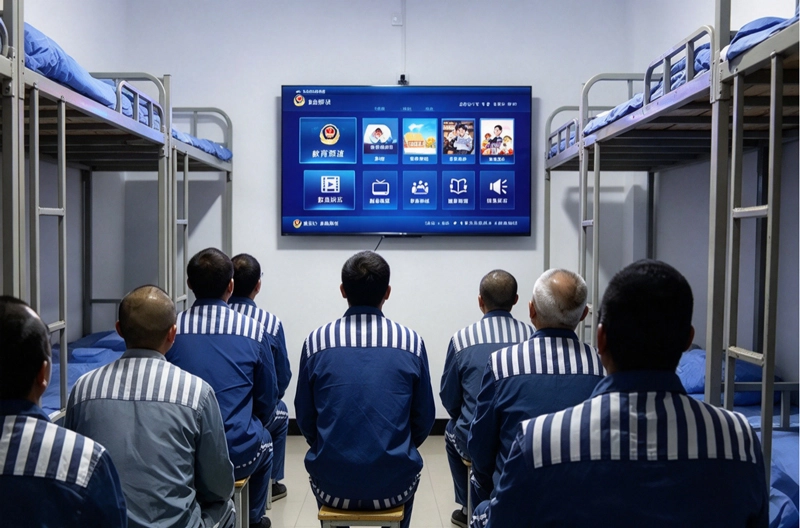
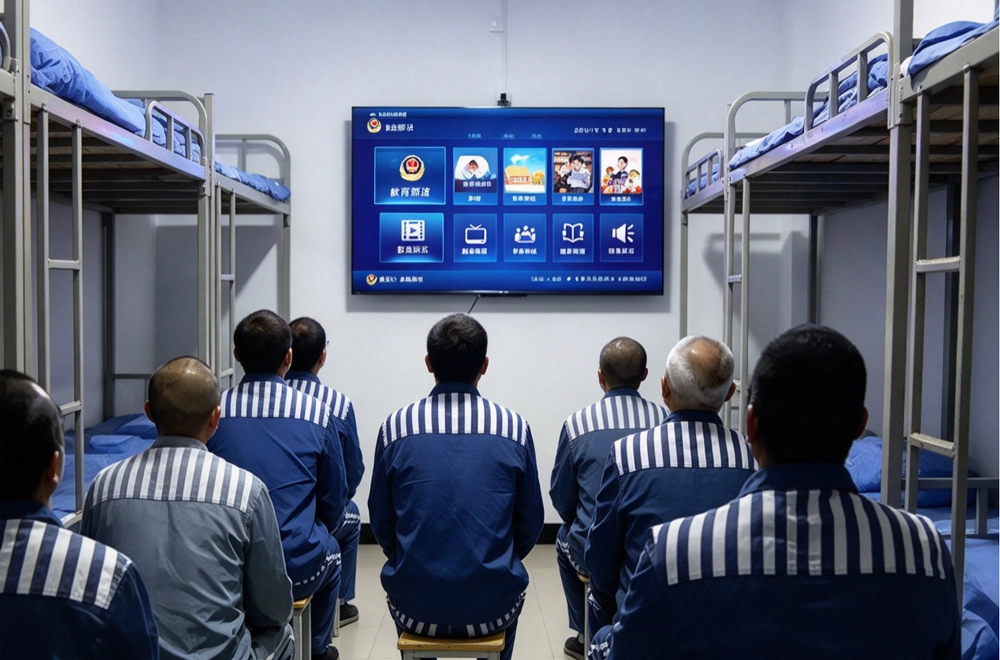
The prison e-education system is an IPTV platform—based on prison e-education technology and designed for correctional facilities—that integrates television-based education with centralised broadcast control. Through the prison’s internal dedicated network, it accurately delivers content such as live television, video-on-demand, course loops and public notices to television terminals in each prison wing and throughout the prison, thereby achieving ‘unified production, zone-specific distribution and full-process control’ of educational content. Against the backdrop of the ongoing development of smart prisons, electronic education systems are replacing traditional centralised teaching and bulk teaching models in electronic classrooms, becoming the core vehicle for the digital transformation of prison education. Based on practical needs, this article outlines a comprehensive approach to system development for prison administrators and system integrators.
1. Why does the educational and rehabilitation programme in detention centres need to be modernised?
For a long time, traditional prison education has been constrained by three bottlenecks: it places a heavy burden on prison staff. Centralised teaching requires organisation, escorting and supervision. The batch-based teaching model in education blocks and multimedia classrooms ties up a significant number of prison staff, making it impossible to achieve full coverage for all inmates throughout the day.
The content is too uniform and lacks differentiation. Prisoners vary considerably in terms of their educational background, length of sentence and type of offence. Some are unable to understand or make use of ‘one-size-fits-all’ teaching materials, making it difficult to achieve the intended educational outcomes.
The process cannot be quantified. Traditional teaching lacks means of recording learning progress and evaluating outcomes; consequently, it is difficult to assess the quality of educational transformation, and no basis can be provided for personalised remediation.
For prison managers, an electronic education system means a reduction in the number of prison officers, the ability to maintain a paper trail, and the provision of assessment tools; for system integrators, understanding the priority of these three pain points is the first step in designing solutions and preparing tender responses.
II. Core Architecture of the Prison Electronic Education System
A typical audiovisual education system adopts a typical B/S architecture, operates within the prison based on the TCP/IP protocol, is physically isolated from the external internet, and adheres to the design principle that ‘broadcast control takes precedence over user experience, and security takes precedence over convenience’. The system can be broadly divided into three layers:
2.1 Front-end and Platform Layer
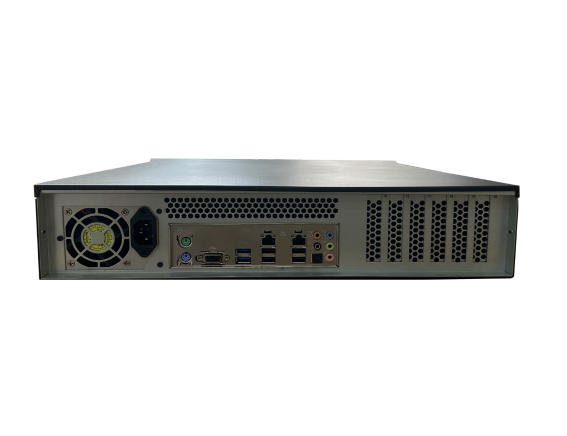
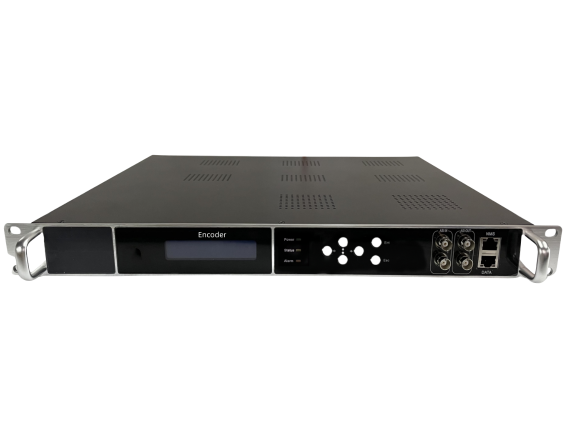
Responsible for managing access to content sources (satellite, broadcast television, telecoms operators, IPTV and in-house programmes), streaming services, content storage and audit and publication. All educational content must be reviewed by the relevant business department before being added to the repository; content compliance must be ensured at source.
2.2 Transport Layer
The system can be transmitted via the prison’s existing local area network, eliminating the need to lay a separate traditional coaxial television network; this not only reduces installation costs but also facilitates future maintenance and expansion. The transmission utilises logical isolation and encryption measures to ensure broadcast security.
2.3 Terminal layer
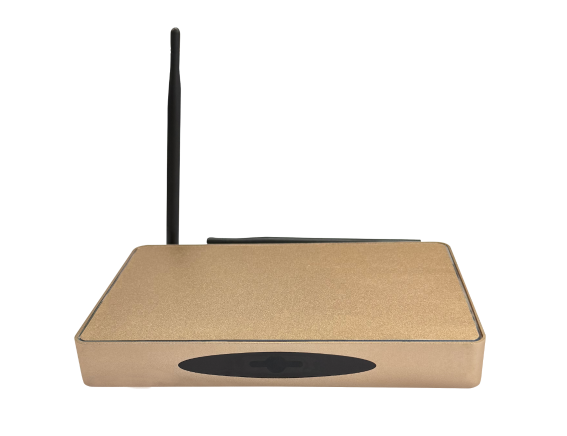
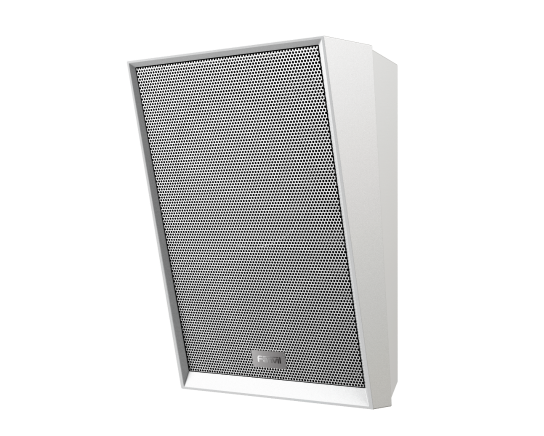
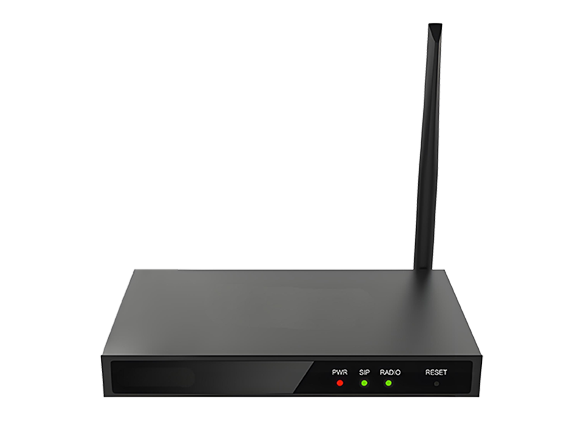
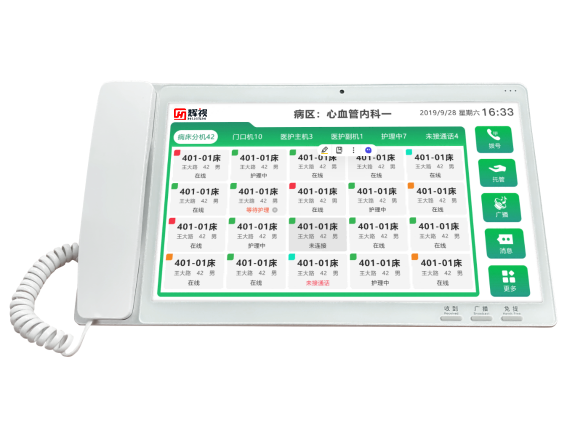
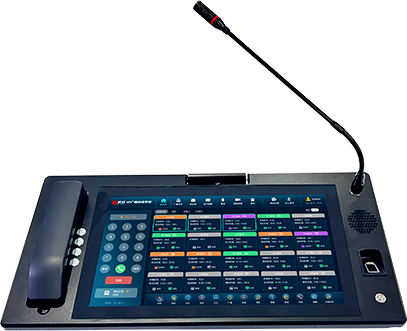
Prisons are equipped with smart televisions or set-top boxes, with the terminals controlled centrally from a back-end system. Given the specific nature of the prison environment, terminal devices are typically required to meet safety standards such as protection against suspension and damage, and their casings and installation methods are specially designed.
III. Six Key Features That Should Not Be Overlooked
3.1 Forced Interruptions and Scheduled Broadcast Control
Supports one-click insertion of content onto all or specific terminal units for scenarios such as emergency notifications, policy announcements and speeches by senior management; during the insertion process, the terminals do not respond to remote control commands to ensure that no information is lost. For day-to-day teaching, content can be automatically played at scheduled times and locations in accordance with the timetable.
3.2 Zonal and Categorised Management
Depending on the supervision zone and terminal group, different programme content and interfaces can be configured, thereby enabling viewers in different zones to watch different channels. Furthermore, the system can tailor content delivery according to the stage of imprisonment: for new staff, the focus is on disciplinary education; for temporary staff, the emphasis is on vocational skills; and for those reintegrating into society, the focus is on guidance.
3.3 On-demand and Carousel
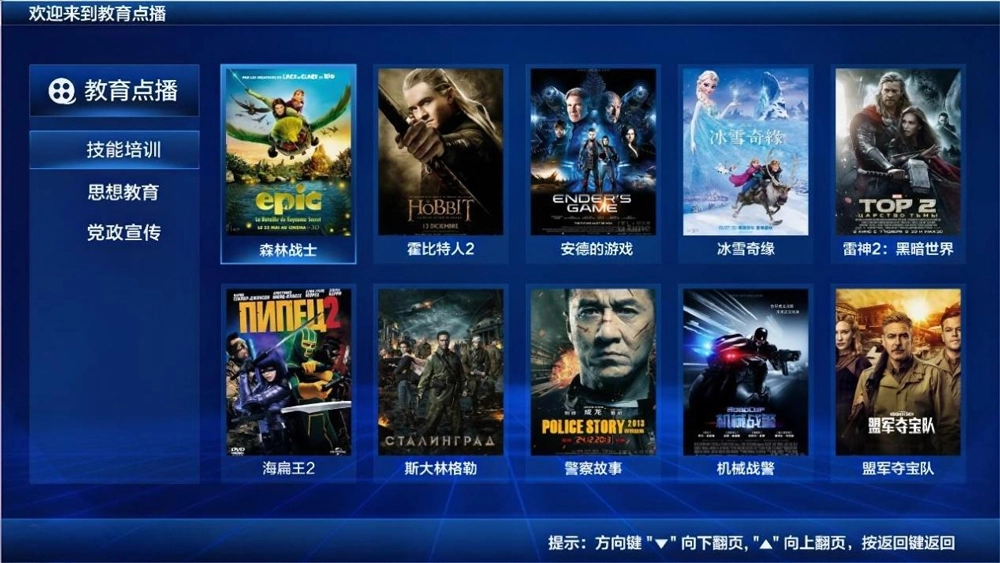
The system maintains a database of courses categorised by subject area, including legislation and regulations, ethics and moral values, mental health, and vocational skills. Prisoners may independently select and view courses within their authorised scope, with support for resuming playback from where they left off. A rotation schedule may also be set for vocational skills courses (such as electrical engineering, cookery and computer skills) to be broadcast at fixed times.
3.4 Tiered Access Rights and Content Moderation
The system supports multi-level access control, strictly prohibiting administrators from assigning management scopes based on regulatory areas, and strictly prohibiting unauthorised access. Content is subject to a ‘review before publication’ policy; publishing tasks and resources requires approval, and all operations are logged and subject to traceable audits.
3.5 Data Analysis and Performance Evaluation
It automatically records data such as terminal online status, programme playback and on-demand viewing behaviour, and supports the export of reports. Educational authorities can gain an understanding of learning reach and learners’ preferences, providing quantitative evidence to inform adjustments to educational strategies.
3.6 Localisation and security and control
As the requirement for independent control becomes increasingly entrenched in the judicial sector, the ability of electronic education systems to be adapted locally—from chips and operating systems to databases—has become a key evaluation criterion for new construction and refurbishment projects. Closed-loop deployment on dedicated networks, encrypted transmission and real-name access controls collectively form the foundation of on-site security in prisons.
IV. Key Considerations for Selecting a Prison Electronic Education System
Whether the client is undertaking the project in-house or an integrator is submitting a tender, it is recommended to evaluate the proposal based on the following four points: consider the provider’s practical experience in the sector rather than hardware specifications. Prison environments encompass standard commercial applications. As IPTV systems do not meet the required control specifications, priority should be given to manufacturers with a track record of similar projects in prisons and detention centres.
Consider the system’s interoperability and scalability. The system should support integration with regulatory platforms, prison open systems and shopping systems, and offer scope for modular expansion to prevent the creation of information silos once it is operational.
Review the operation, maintenance and response procedures. As the supervision system has specific downtime windows, it is necessary to confirm the manufacturer’s commitments regarding spare parts, remote operation and maintenance, and emergency response.
Review the content compliance system. The completeness of the audit processes, the granularity of access permissions and the log auditing are directly relevant to project acceptance.
V. Extension of Application Scenarios
The electronic education system is also suitable for correctional settings such as detention centres, drug rehabilitation centres and juvenile detention centres. Its value is particularly evident in two contexts: induction education—where notices regarding prison discipline, rights and obligations are played on a loop via terminals to help newly admitted inmates adapt quickly to the correctional environment; and correctional education—which promotes employment guidance and social adaptation courses to prepare inmates for a smooth reintegration into society, and is also a key component in reducing the risk of reoffending.
六、Frequently Asked Questions
Q1:Does the development of an audiovisual education system require a new dedicated network?
This is not usually necessary. The system is system-based. When running on the TCP/IP protocol, it can utilise the prison’s existing internal local area network; it is simply a matter of planning bandwidth and resource allocation on a point-by-point basis.
Q2:How can the broadcast of illegal content be prevented?
Based on the ‘content review prior to publication’ approach, combined with tiered terminal access permissions and a ‘three-tier mechanism’: content is reviewed before being added to the repository; terminals can only view authorised content; and all publication and viewing records are subject to traceable auditing.
Q3:Can prisoners choose their own programmes?
On-demand viewing is permitted within the scope of authorised access. The system supports not only independent on-demand viewing from a limited content library, but also a mandatory mode where content is scheduled entirely by the back-end. The specific level of access is determined by management in accordance with regulatory requirements.
The value of an electronic education system for prisons ultimately hinges on two key aspects: security and controllability—where every aspect, from content and the network to access rights and logs, can be managed and audited; and educational effectiveness—enabling limited prison staff resources to deliver a broader and more targeted educational transformation. For managers, it serves as the digital infrastructure for educational transformation; for integrators, a thorough understanding of the control logic specific to the prison environment is more likely to secure a project than simply presenting a list of features. Only by evaluating the system against the four key criteria of ‘implementation experience, scalability, operational responsiveness and compliance framework’ can a truly effective system be built.