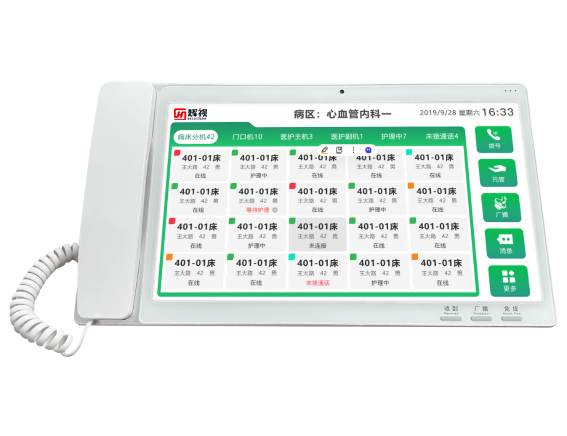
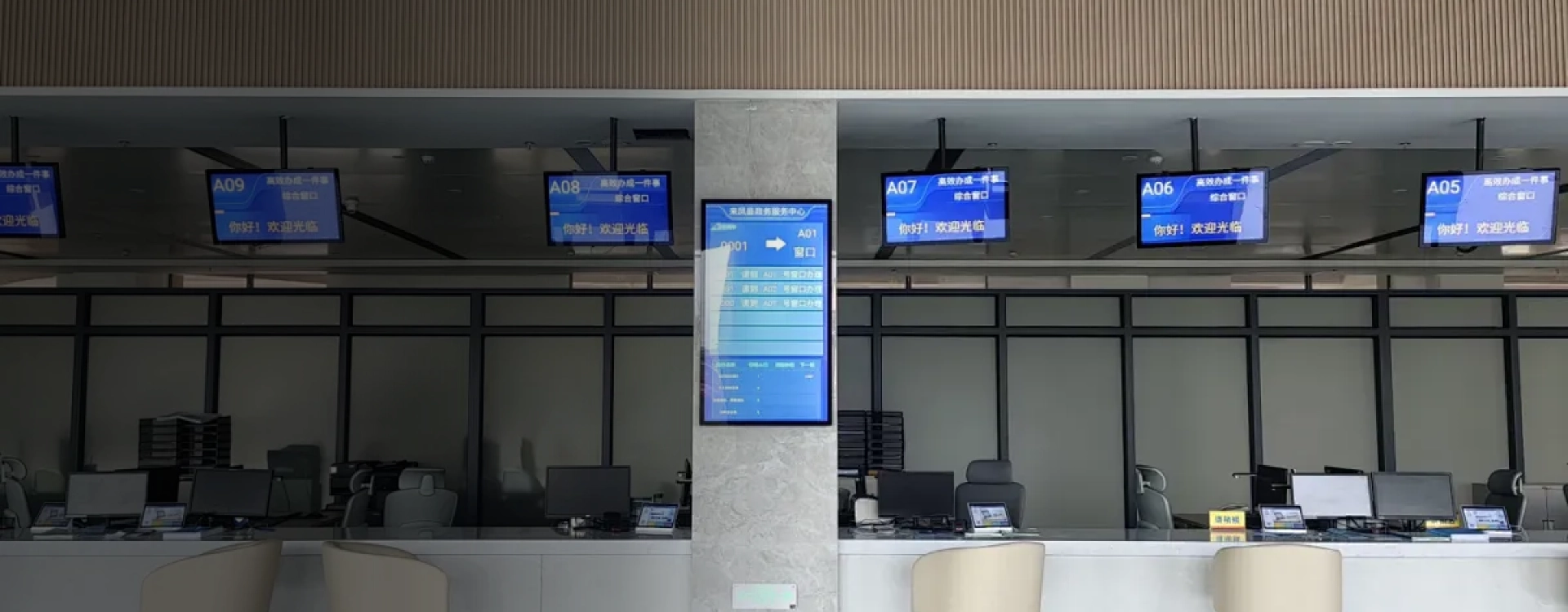
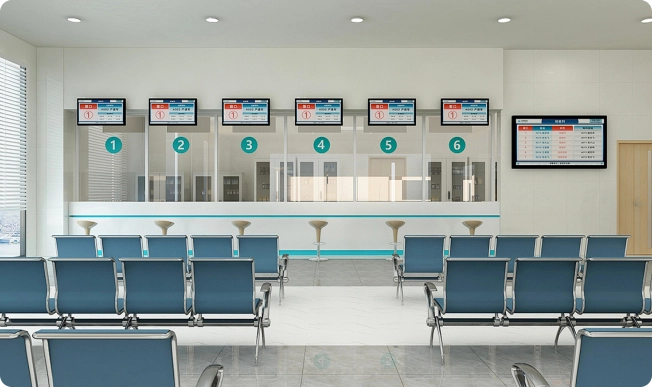
To address the issues of disorderly queuing and inefficient waiting times in traditional outpatient departments, the Smart Outpatient Queue Management System leverages IoT and big data technologies. It interfaces with hospital HIS/LIS systems to centrally manage appointment slots.
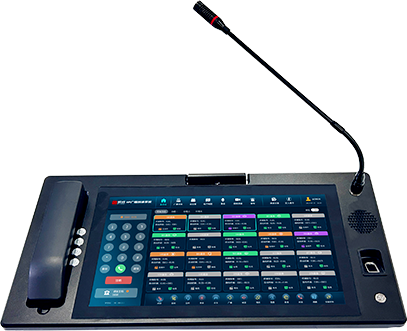
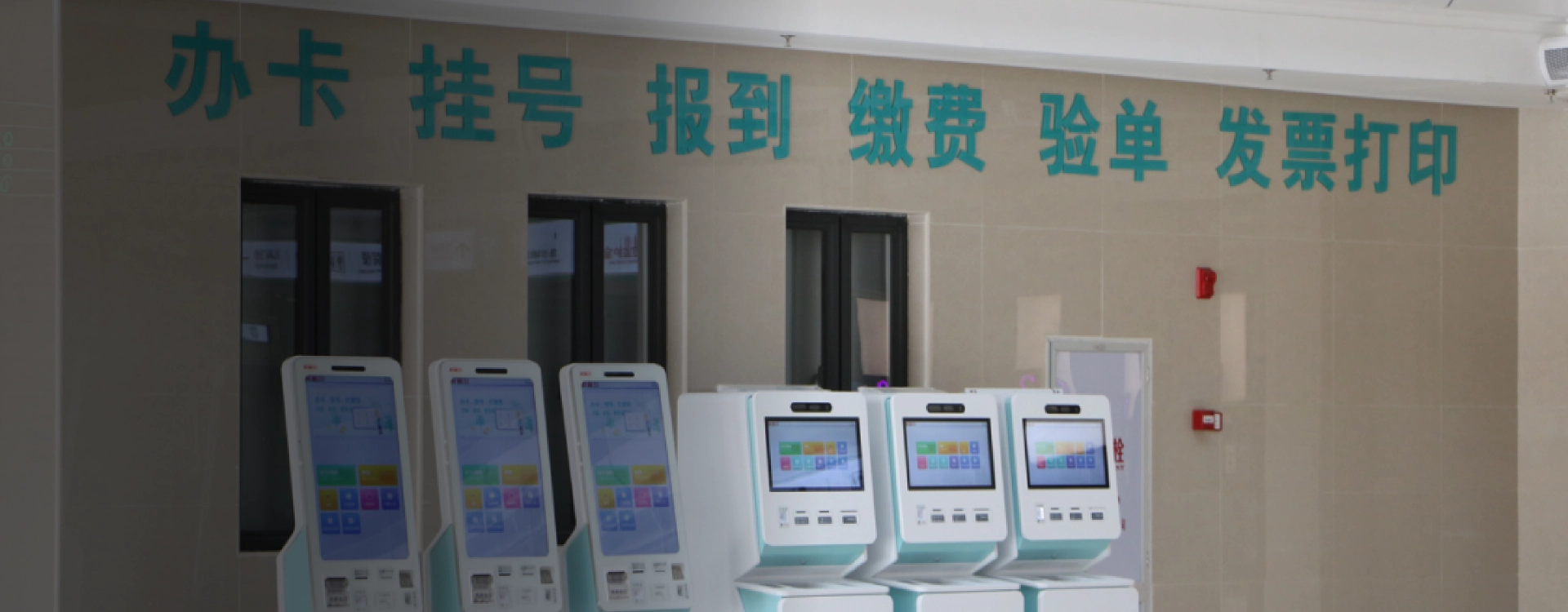
Patient-facing terminal (appointment booking, queue status checking), consultation room terminal (one-touch patient call, information retrieval), management terminal (queue monitoring, optimal resource allocation). This reduces unnecessary waiting and minimises crowding risks, provides decision-making support for hospitals, and enhances outpatient efficiency alongside patient and clinician experience.
Addressing the issues of chaotic queuing and lack of transparency in traditional outpatient settings, patients can now track their waiting progress and receive appointment call notifications via mobile devices. This reduces unnecessary waiting time, prevents missed or misdiagnosed appointments, and significantly improves overall satisfaction with healthcare services.

The management platform provides real-time monitoring of data such as consultation room queues and patient consultation durations. This facilitates optimisation of consultation room allocation and doctor scheduling, minimising resource underutilisation and wastage, thereby ensuring smoother and more orderly outpatient processes.

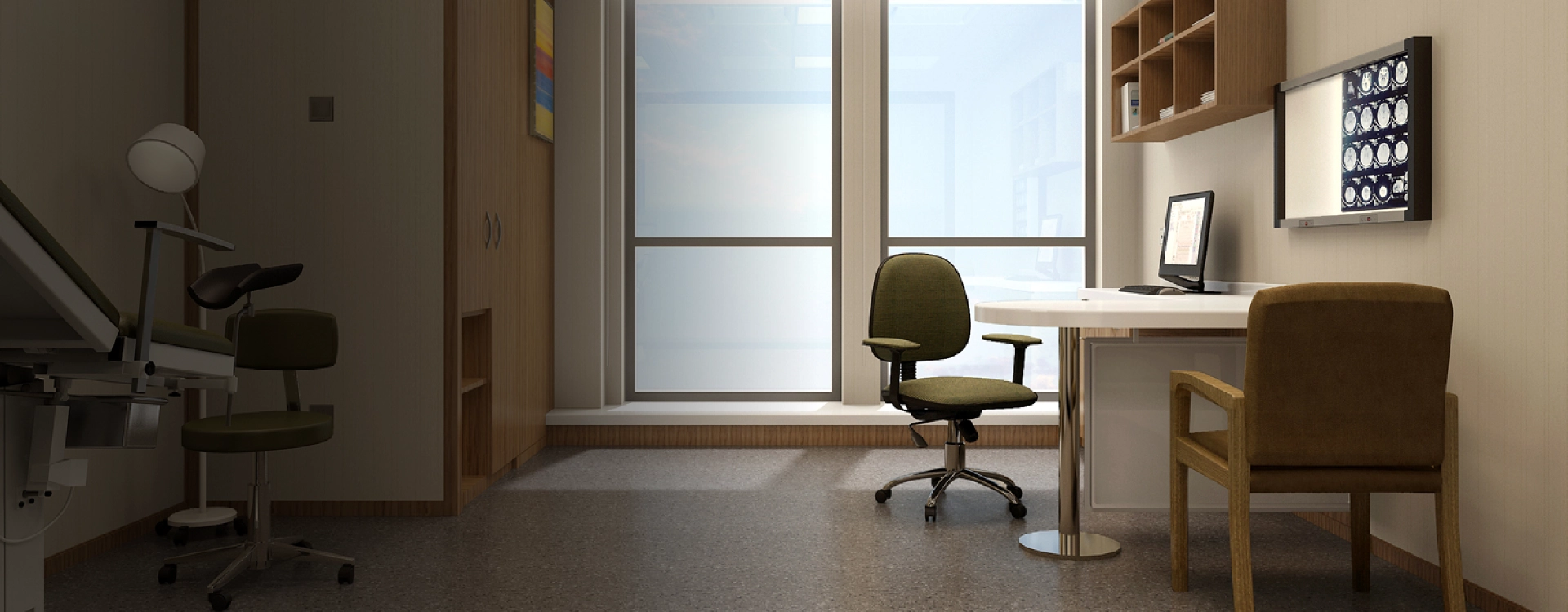
Doctors no longer need to manually manage queues. Through the consultation room software, they can call patients by number with a single click, retrieve patient information, and efficiently handle missed appointments. This allows them to focus on clinical work, effectively increasing the number of patients seen per unit of time.

The system automatically aggregates data such as waiting times and departmental consultation volumes, generating multi-dimensional statistical reports. This provides objective evidence for hospitals to adjust appointment allocation and optimise consultation schedules, thereby supporting management decision-making.

Seamlessly integrates with existing hospital information systems such as HIS and LIS, eliminating the need for extensive hardware or software modifications. This reduces implementation costs and complexity while ensuring smooth data flow across all systems.

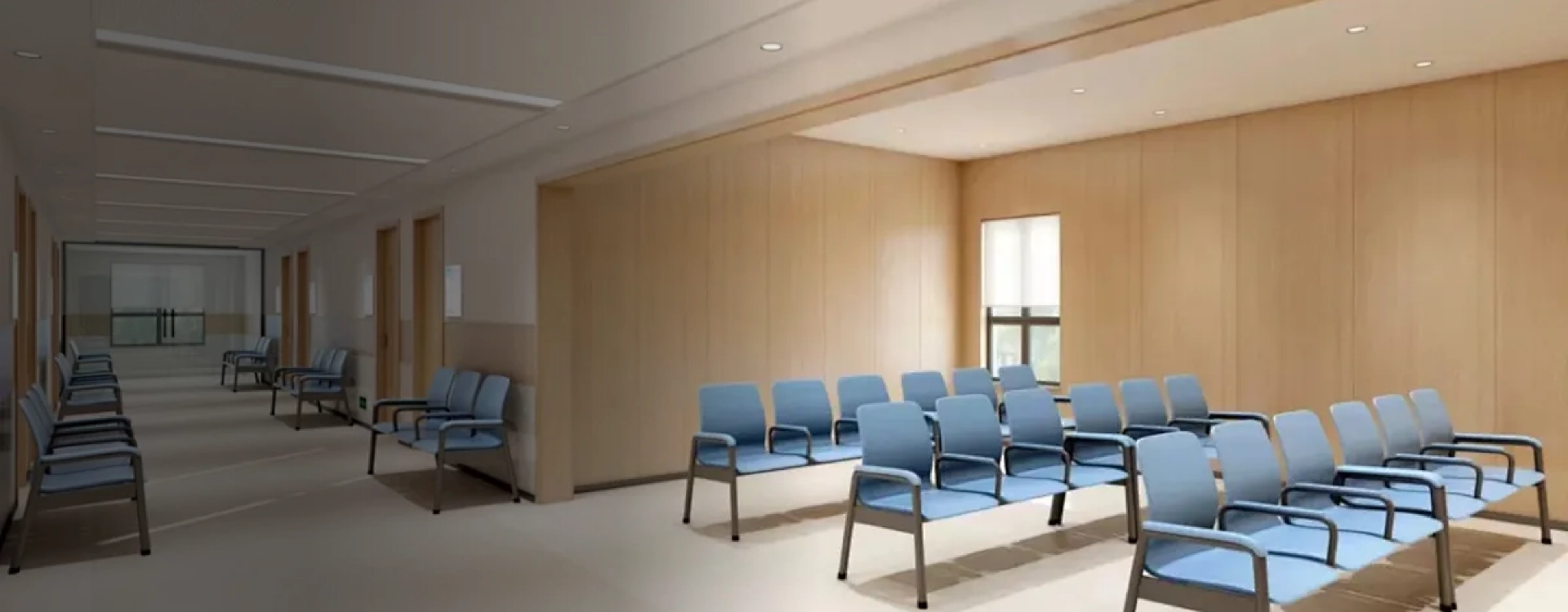
Patients are advised to attend appointments in staggered time slots based on call-up notifications and waiting progress, thereby avoiding crowding in the waiting area. This approach minimises congregations, maintains orderly outpatient services, and complies with routine epidemic prevention requirements.