In the current wave of globalisation, the persistent social scourge of school bullying casts a shadow over educational environments across nations and regions, sparking widespread concern and profound anxiety throughout society. It has long transcended the narrow confines of traditional bullying, no longer confined to mere physical altercations or verbal abuse. Cyberbullying, an emerging and insidious form, is proliferating at an alarming rate. Contemporary school bullying has evolved from isolated friction between adolescents into a deeply entrenched and far-reaching societal issue, affecting every fibre of families, schools and communities. An authoritative report by the United Nations Children's Fund reveals that globally, approximately 30% of students have experienced at least one bullying incident within the past year. Behind this statistic lies the harsh reality of countless children suffering physical and psychological trauma. Bullying not only leaves physical scars on victims but also etches indelible marks of pain deep within their souls.

Students subjected to prolonged bullying are highly susceptible to psychological distress such as depression and anxiety. In extreme cases, the overwhelming psychological pressure may even lead to the dreadful contemplation of suicide. The harm caused by school bullying extends far beyond this; like a virus, it erodes the harmonious atmosphere of the campus and undermines the originally positive learning environment. Students struggle to concentrate amidst fear and unease, which not only undermines their academic performance but also hinders their holistic development. Consequently, effectively preventing and addressing school bullying has become an urgent and formidable challenge for educators, policymakers, and technology experts alike. It is imperative that all stakeholders collaborate to identify practical solutions.
With the rapid advancement of artificial intelligence (AI) technology, a quiet revolution is unfolding within the education sector. Leveraging its formidable data processing capabilities and intelligent analytical prowess, AI is introducing novel approaches and methodologies to educational administration, demonstrating immense application potential across all facets of teaching and learning. In the classroom, AI technology can tailor personalised learning programmes for students based on their progress, knowledge acquisition, and learning aptitudes, thereby realising the educational ideal of teaching according to individual aptitude. Simultaneously, through intelligent tutoring systems, it can promptly address student queries and offer targeted learning advice, thereby enhancing learning efficiency. Regarding assessment of learning outcomes, AI technology employs advanced algorithms to analyse student learning data, enabling precise evaluation of knowledge acquisition and improvements in learning abilities. This provides teachers with scientific grounds for adjusting teaching strategies.
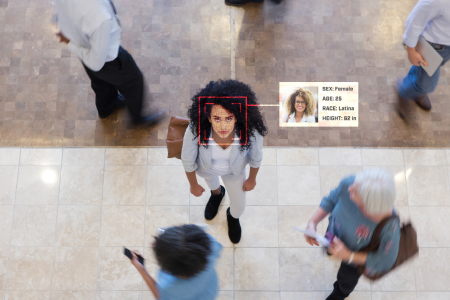
In the realm of campus security management, the application of AI technology further safeguards campus safety. By conducting real-time analysis of data collected from various surveillance devices across the campus, AI technology can promptly detect abnormal behaviour and potential security risks, such as fights or illegal intrusions. Particularly through advanced technologies like natural language processing and facial recognition, AI can monitor students' verbal exchanges and facial expressions in real time, accurately capturing sensitive information potentially indicative of bullying. This provides robust support for preventing and intervening in school bullying. The application of this technology not only enhances the efficiency of campus safety management but also improves its precision, laying a solid foundation for building a secure and harmonious campus environment.
Against the backdrop of escalating school bullying and the rapid advancement of AI technology, an AI-powered anti-bullying system for schools has emerged. This innovative system integrates multiple cutting-edge technologies—including big data analytics, natural language processing, image recognition, and behavioural analysis—to form a comprehensive, multi-layered safety net for campuses. Technology experts and education professionals have collaborated closely in developing this anti-bullying system. Their objective is to harness the “intelligent eye” of AI to anticipate potential bullying incidents within schools, issuing early warnings before such events occur or when they are in their nascent stages. This enables timely intervention measures to protect every child from the harm of bullying. The emergence of this system not only provides new technological means to tackle school bullying but also sets a benchmark for the deep application of AI technology within the educational sphere.