In hospitals, are ward televisions only for binge-watching dramas?
Can it become a “smart terminal” that enhances healthcare services and brings warmth to patients?
As traditional ward televisions increasingly struggle to keep pace with the wave of smart healthcare, a Beijing People's Hospital has partnered with Huishi to transform ordinary ward televisions into multifunctional devices that integrate “Information services, leisure and entertainment, educational outreach and communication, brand showcase” An integrated intelligent interactive video platform.
This represents not merely a technological upgrade, but a profound restructuring of healthcare service processes, patient experience management, and hospital operational models.
Next, we shall unveil the hospital's core solutions and key technological deployments!
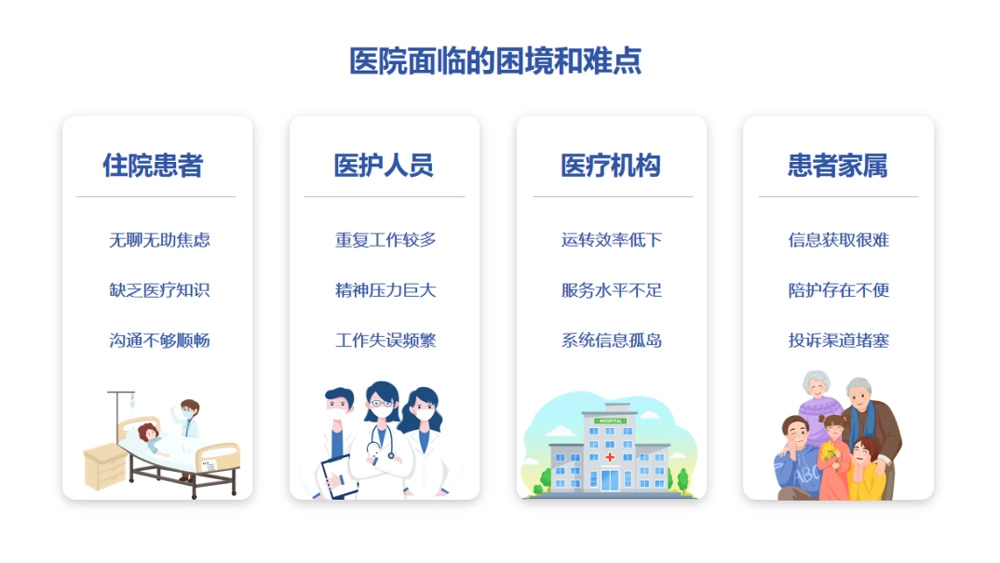
The difficulties and underlying challenges in hospital operations
Poor patient experience:Hospital life is monotonous, anxiety spreads, and the rehabilitation experience is significantly diminished.
Heavy burden on healthcare staff:Nurses repeat the same instructions hundreds of times daily, leaving them hoarse and working inefficiently.
Slow transmission of information:Departmental notifications rely on word of mouth, resulting in delayed information, frequent errors, and difficulties in ensuring full dissemination.
There is a great deal of waste of resources.:Patients running around the entire building due to unfamiliarity with procedures and scheduling increases the hospital's management costs.
Solution: Establishing an integrated smart healthcare video conferencing platform
We have developed not merely an IPTV system, but an intelligent interactive ecosystem that integrates information services, entertainment and leisure, educational communication, and brand display.
This system centres on the patient journey, redesigning every digital touchpoint during admission and hospitalisation. Where once communication relied on the nurse's voice, now it is facilitated by the system. It truly achieves peace of mind for nurses, reassurance for patients, and confidence for management.
Five Core Functions
Using screens as the medium, creating an information hub
Redefining healthcare information delivery through a digital information matrix, breaking down traditional information barriers. Real-time broadcasts of hospital big data—department maps, specialist profiles, admission/discharge procedures, consultation workflows, and health resources—all accessible at a glance. Millisecond-level scrolling alerts for public health emergencies are pushed across the entire network, establishing a visual vanguard for the hospital's digital command system.
Wellness Ecology, Elevating Experiential Services
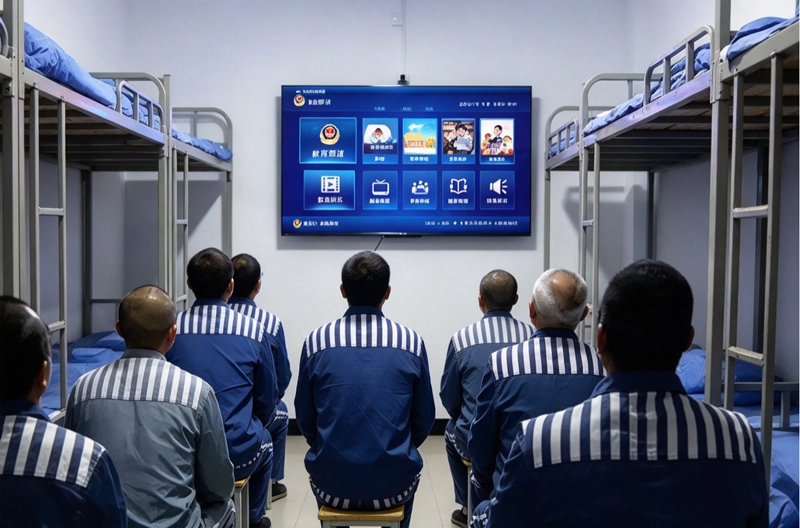
Tailored to each department, personalised audio-visual content and educational videos are precisely delivered to create a “digital healing pod”, helping patients reduce anxiety levels and accelerate recovery.
Brand promotion, rapidly establishing trust
Showcasing a century of philanthropic endeavours and academic distinction, immersive videos bring the brand narrative to life at patients' bedsides, fostering profound trust and emotional resonance.
Smart services, overcoming spatial constraints
One-touch activation of medication reminders, nutritional meal ordering, satisfaction surveys, convenient services, hospital shopping platforms and other functional services bridges the final gap in doctor-patient communication, achieving a paradigm shift from passive healthcare to participatory healthcare.
Policy Engine, Shaping Healthcare Paradigms
Compliant with national smart hospital rating criteria and visualisation metrics for health education; responding to policy directives to intensify health education initiatives, enabling public health literacy to develop organically through engaging content, thereby propelling hospitals towards a new era of value-based healthcare.
Technical Architecture: A Future-Oriented Foundation for Smart Healthcare
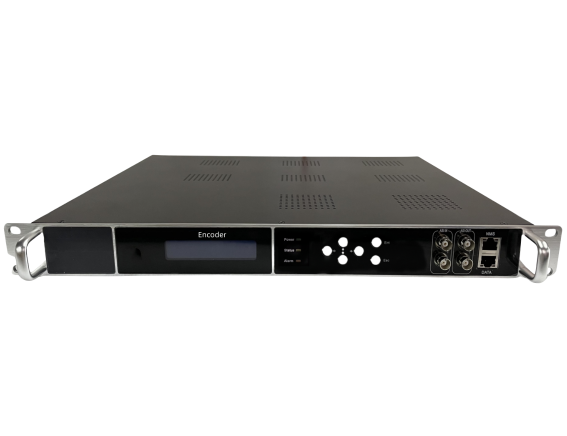
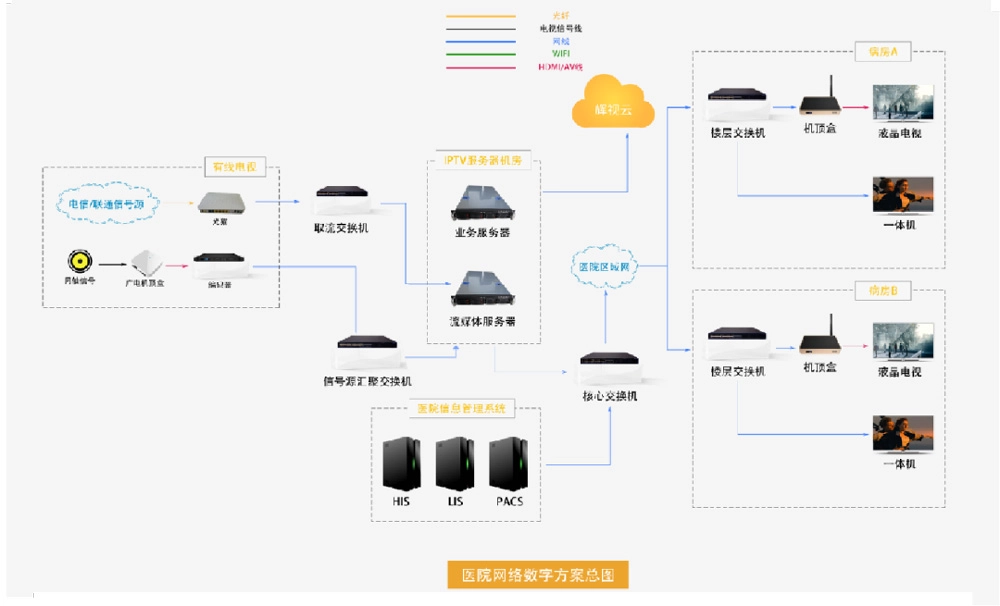
System Architecture :Centralised control + distributed playback: Unified management of server clusters, with only playback terminals installed in patient rooms for minimal deployment.
Hardware equipment
Display: 43-inch smart engineering television, designed to enhance the patient viewing experience;
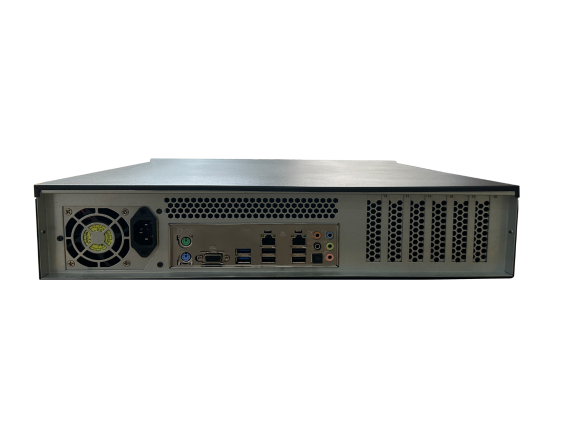
Server: High-performance server with ample storage capacity, ensuring stable system operation 24 hours a day, 7 days a week.
Software system :A proprietary digital signage software solution developed in-house, supporting content editing, layout design, scheduled publishing, and remote control functionality.
Hospital IPTV Intelligent Interactive Video System Network Diagram
Customised UI interfaces and functional modules to meet bespoke requirements
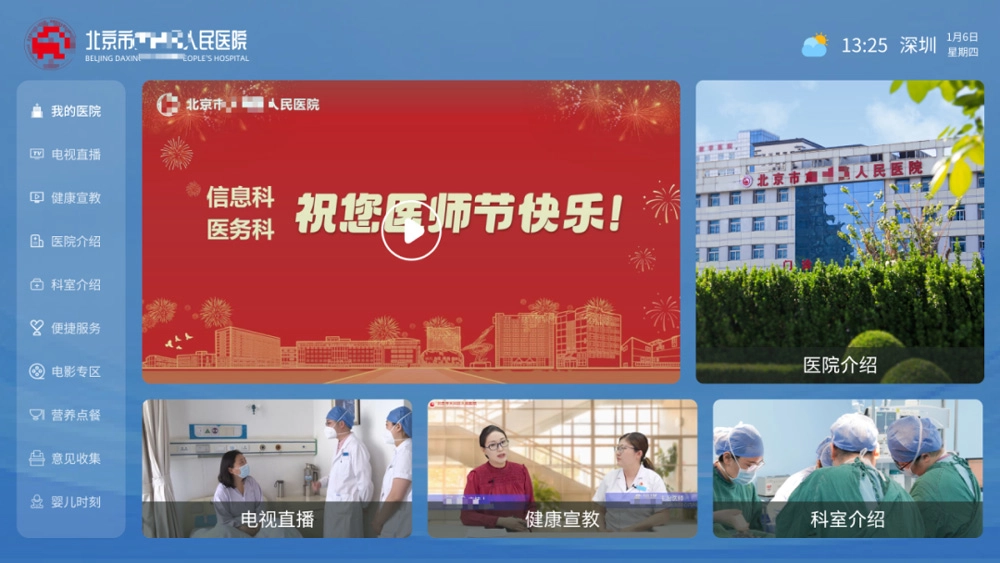
Primary interface
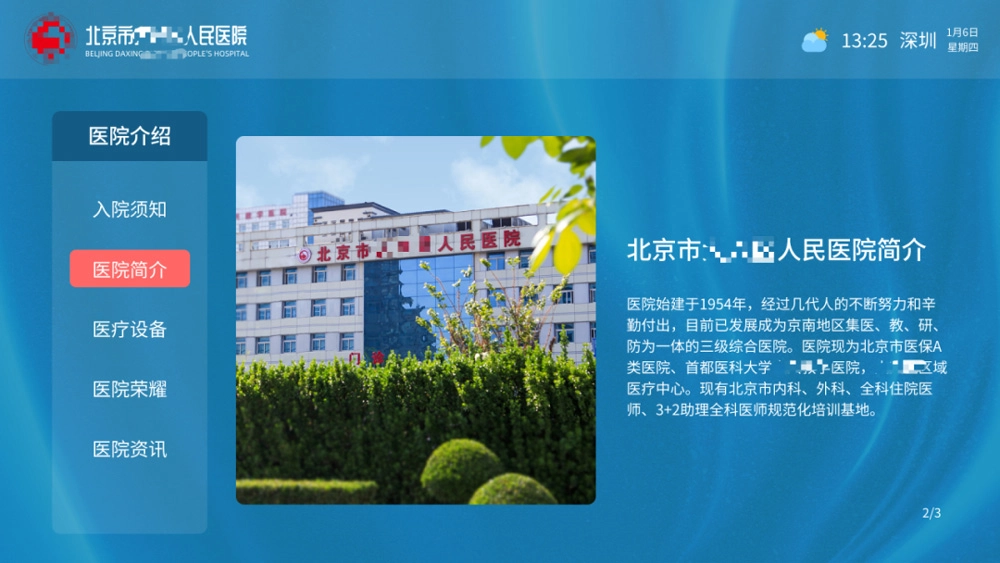
Secondary interface
The Huishi IPTV Integrated Communication System combines IPTV, information dissemination, health education, and nurse call functions into one cohesive solution. This transforms every screen into a source of care and intelligence, serving as a pivotal component in empowering the development of smart hospitals.