With the continuous advancement of smart prison construction policies, traditional analogue intercom systems can no longer meet the demands of modern detention facilities for real-time communication, unified dispatch, and information security. IP-based SIP broadcast intercom systems are progressively becoming essential infrastructure for the digitalisation of correctional facilities, including prisons, police custody centres, and detention centres. Through a unified SIP network platform, management personnel can implement video intercom, broadcast announcements, emergency response, information exchange, and centralised dispatch functions, significantly enhancing operational efficiency and security standards.
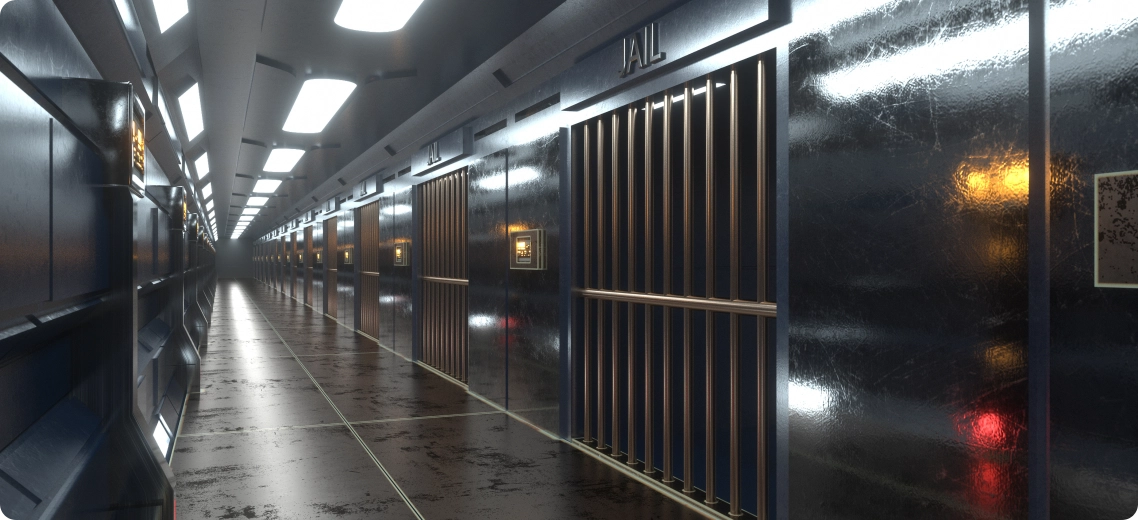
A prison in Anhui Province has recently implemented a SIP-based broadcasting, intercom and video conferencing system solution provided by Huishi, achieving an upgrade from traditional security measures to a digitalised, intelligent supervision system. Huishi delivered a comprehensive solution for this project, encompassing system planning, equipment deployment and platform commissioning, thereby assisting the institution in establishing a secure, intelligent supervision framework.
What is a SIP Broadcast Intercom System? Why Deploy It in Smart Detention Facilities?
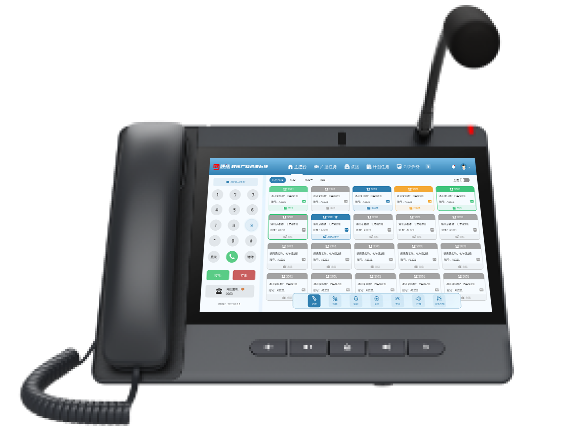
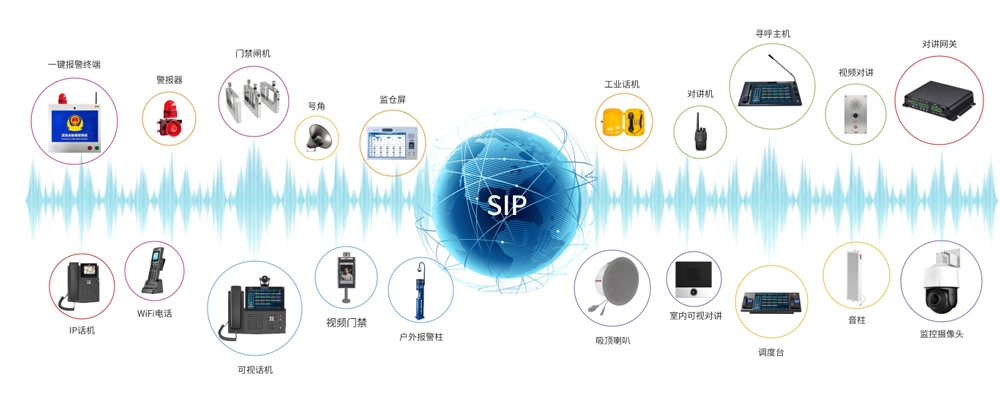
SIP (Session Initiation Protocol) is a standardised audio-visual communication protocol widely employed in the field of VoIP communications. Within the context of smart prison development, the SIP broadcast intercom system integrates audio, video, and data communications via IP networks, enabling real-time communication between diverse terminals alongside centralised management and control.
Compared to traditional analogue intercom systems, SIP broadcast intercom systems offer the following advantages:
Unified Communications Protocol: Supports cross-device and cross-vendor interoperability;
IP-based network deployment: Eliminates complex cabling requirements and supports remote scheduling.
Multi-system integration capability: Capable of integration with surveillance, access control, information display, and public address systems;
Centralised management and rapid response: The platform handles unified scheduling and control;

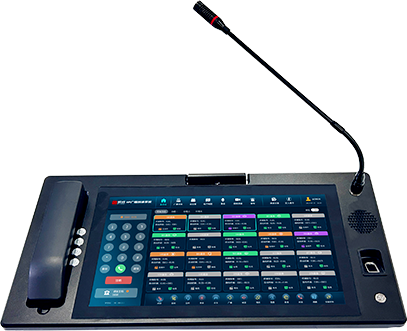
Through the SIP broadcast intercom system, supervisory personnel can swiftly handle cell calls, information queries, broadcast tasks and emergency incidents, achieving centralised information management, supervision and emergency response within seconds.
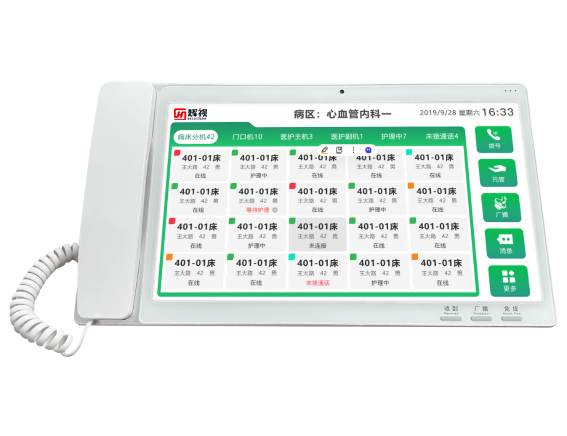
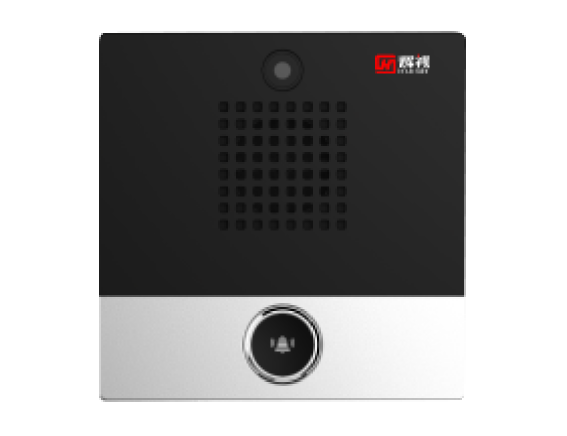
Core Terminal: HS-JC01 Smart Prison Monitoring Internal Display
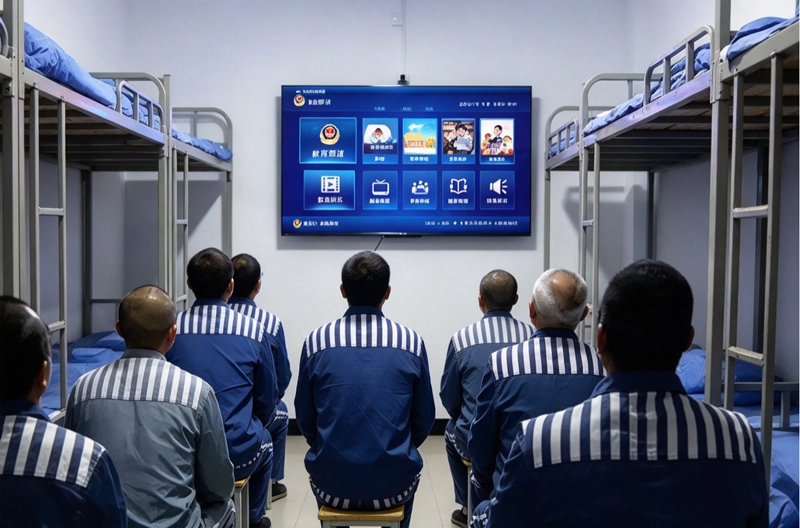
The HS-JC01 Smart Prison Cell Interior Display deployed for this project serves as the core terminal of the SIP broadcast intercom system. This industrial-grade device is specifically engineered for detention centre environments, offering both high stability and security.
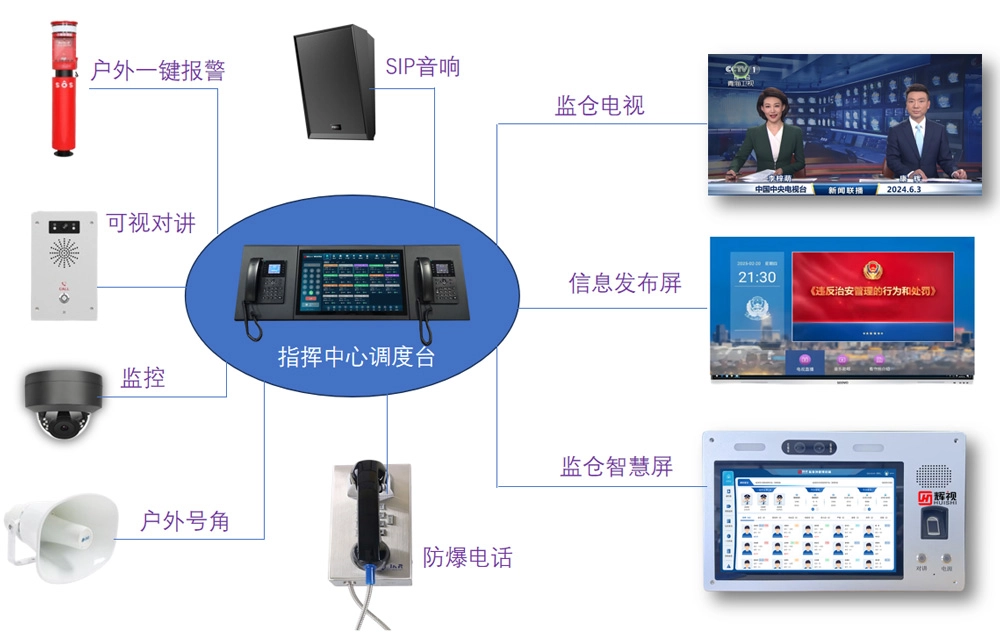
SIP Video Intercom Communication
HS-JC01 supports: SIP audio and video calls, two-way video intercom, real-time voice communication, and SIP broadcast reception.
When personnel within the detention cell initiate a call, the management control room can conduct high-definition two-way video communication through the system while simultaneously activating the surveillance feed. This enables a closed-loop management system where staff can ‘see the person, hear their voice, and understand the situation’.
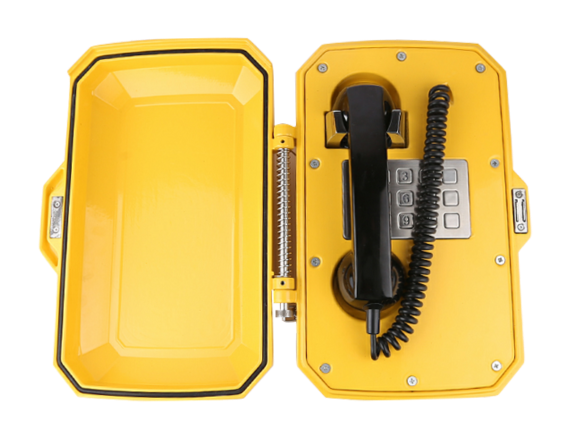
Industrial-grade protective design: The equipment features an Ex d IIB T4 Gb explosion-proof rating and IP65 protection rating, offering resistance to moisture, dust and vandalism to ensure long-term stable operation within detention facility environments.
Flexible installation: The HS-JC01 supports both wall-mounted and recessed installation, featuring a tamper-proof design to adapt to diverse detention cell environments and ensure equipment security.
Core Functions of the SIP Broadcast Intercom System
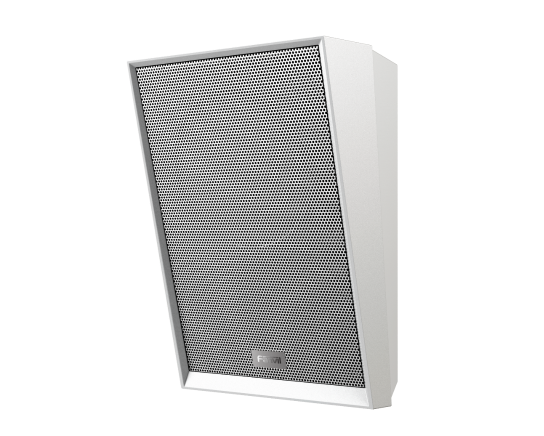
Intelligent Broadcasting and Public Announcements: The system supports district-wide broadcasts, zone-specific broadcasts, scheduled broadcasts, and emergency broadcasts. Through one-touch operation via the dispatch host, it transmits policy guidance, notification messages, or educational videos. Centralised broadcast management enhances information coverage efficiency, ensuring swift and accurate dissemination of information.
Two-way information exchange: Detainees may use terminals to access: personal points enquiries, expenditure records, payment details, and roll call registration. This self-service information exchange alleviates police officers' workload while enhancing transparency in detention oversight.
Emergency Alarm Interlocking: Upon activation of the one-touch alarm function, the system automatically triggers the following interlocking actions: management control room alarm alerts, video surveillance interlocking, activation of audible and visual alarm devices, and access control system interlocking. This enables emergency response within seconds, significantly enhancing security and prevention capabilities within detention facilities.
Technical Advantages: Standard SIP architecture + bespoke customisation;
HuiShi SIP Intercom System offers multiple industry advantages: Standard SIP protocol: High compatibility, enabling cross-vendor interconnection;
Self-customisation: Tamper-proof, vandal-resistant, and self-destruction-proof design;
System Integration: Unified management of intercom, public address, surveillance, and information dissemination systems;
Domestication and Security Compliance: Meeting national cybersecurity grading protection requirements;
The system has been extensively deployed in prisons, police custody centres, detention centres, drug rehabilitation centres, and judicial supervision facilities.
Future Trends in Smart Prison Development
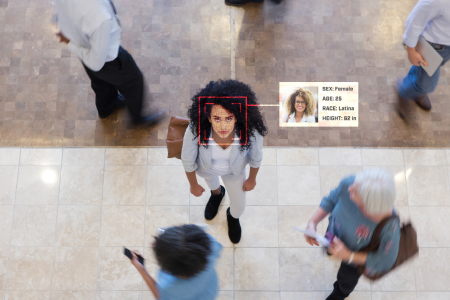
With the advancement of AI, big data and the Internet of Things, future detention centre systems will undergo further upgrades: AI-powered behavioural analysis and early warning systems, big data monitoring platforms, facial recognition and identity verification, intelligent IoT terminal management, and data visualisation for monitoring and analysis. These technologies will propel smart detention centre management towards greater intelligence and security.
FAQ: Frequently Asked Questions (SEO Long-Tail Keyword Coverage)
Q1: What distinguishes a SIP broadcast intercom system from a conventional IP intercom system?
A1: The SIP broadcast intercom system operates on the SIP protocol, supporting multi-service integration, cross-vendor interoperability and centralised dispatch. It offers faster response times and a richer feature set.
Q2: Why is it necessary to deploy a SIP broadcast intercom system in smart prisons?
A2: Smart prisons demand high standards for centralised information management, emergency response and security protection. The SIP intercom system enables unified dispatch, video monitoring, public address announcements and emergency alerts.
Q3: What functions can the SIP video intercom terminal perform?
A3: The terminal supports high-definition video intercom, SIP broadcast reception, information enquiry, self-service functions, and one-touch emergency call capabilities.
Q4: How does the SIP broadcasting system integrate with surveillance and access control systems?
A4: Upon triggering an alarm or dispatch event, the system can notify video surveillance and access control systems via the SIP protocol to achieve coordinated response.
Q5: What security features are incorporated into the HS-JC01 Smart Detention Cell Internal Display?
A5: Features tamper-proof, explosion-proof (Ex d IIB T4 Gb), and dustproof/waterproof (IP65) ratings. Industrial-grade design ensures long-term operational stability.
Q6: What are the future development directions for SIP broadcast intercom systems?
A6: Integrating AI, big data and the Internet of Things to achieve intelligent behavioural analysis, automated alerts, visualised data management and intelligent terminal management.