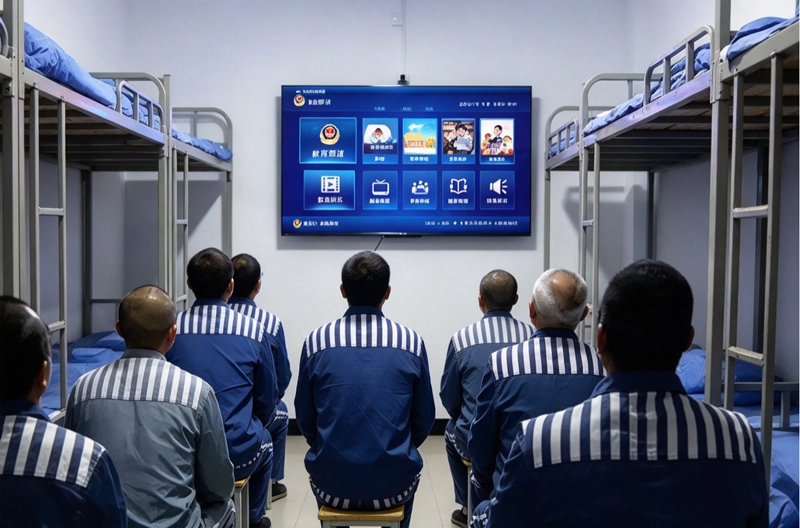
China is accelerating into an ageing society, with the issues of ‘elderly people lacking access to medical care’ and ‘difficulties in accessing healthcare’ becoming widely debated social concerns. Behind the societal worry of ‘elderly people lacking access to medical care’ lies a structural contradiction between the distribution of healthcare resources, service capacity, and the health needs of the ageing population.
In response to this significant challenge, China is undertaking a systematic response through national strategies and systematic initiatives.
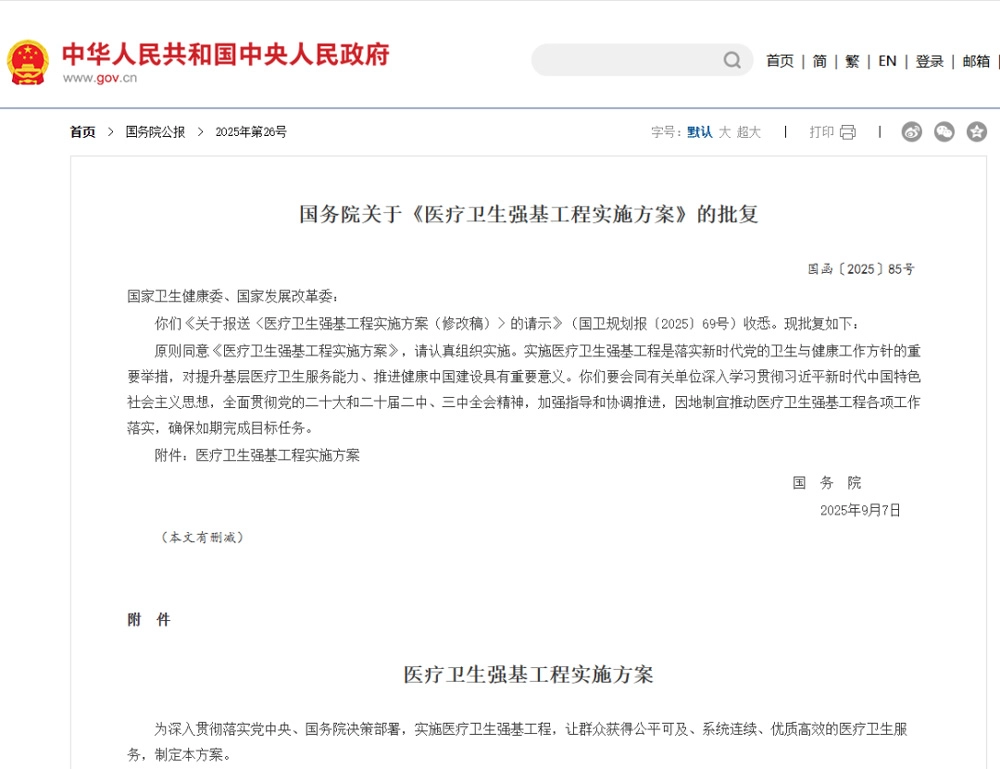
In September 2025, the State Council formally approved the Implementation Plan for the Healthcare Foundation Enhancement Project (hereinafter referred to as the Foundation Enhancement Project), charting a clear blueprint for the development of primary healthcare systems over the next five to ten years. When considered alongside recently released ageing statistics and fiscal investment policies, it is evident that the nation is advancing simultaneously across three dimensions – systems, funding, and services – to establish a robust defence for the healthcare needs of hundreds of millions of elderly citizens.
The reality of an ageing population
Recently, the Ministry of Civil Affairs and the National Office for the Aged jointly released the 2024 National Development Bulletin on Ageing Affairs.
Data indicates that by the end of 2024: The population aged 60 and over reached 310.31 million, accounting for 22.0% of the total population; The population aged 65 and over reached 220.23 million, accounting for 15.6% of the total population;
China has entered a moderately aged society and is progressing towards a more advanced stage. More noteworthy is the structural shift: by 2030, those aged 65 and above are projected to exceed 20% of the population, marking the transition into a super-aged society.
By 2035, the population aged 80 and above is projected to exceed 81.05 million. Advanced age is frequently accompanied by multiple coexisting conditions and rising rates of disability or partial disability, placing exceptionally high demands on the accessibility, specialisation and continuity of healthcare resources. This is no longer merely a matter of ‘difficulty in accessing medical treatment’; rather, it represents a systemic challenge concerning the entire healthcare service system's capacity to adapt to profound demographic shifts.

Policy Blueprint: Establishing 15-Minute Healthcare Circles
In addressing population ageing, the foremost task is to reshape the healthcare delivery system to ensure medical services are readily accessible.
The Foundation Strengthening Initiative explicitly stipulates that by 2027, a more rational layout of primary healthcare institutions shall be established, with residents able to reach the nearest medical service point within 15 minutes.
By 2030, counties and districts with a permanent population of 50,000 or more shall generally possess the capacity to perform cataract surgery and provide haemodialysis services.

To achieve this objective, the state will focus on establishing a three-tiered rural healthcare service system comprising county hospitals as the leading institutions, township health centres as the pivotal hubs, and village clinics as the foundational units. Concurrently, efforts will be made to enhance the capacity of urban community health services, while innovating a ‘fixed-based plus mobile’ service model to ensure the seamless delivery of healthcare services to the ‘last mile’.
Funding in place: Supporting medical equipment upgrades
To ‘optimise and upgrade county-level medical facilities and equipment’. During the 15th Five-Year Plan period, support will be provided for establishing approximately 1,000 closely integrated county-level medical consortiums. This will advance the quality enhancement and upgrading of county hospitals and key central township health centres, developing services in general practice, infectious diseases, anaesthesia, pathology, cataract surgery, haemodialysis, and mental health services. We will improve facilities and equipment in underdeveloped departments of county-level public hospitals and township health centres, and coordinate the deployment of mobile units such as ‘mobile clinics + mobile operating theatres’ to enhance outreach medical services to remote areas, mountainous regions, and islands.
The implementation of this blueprint hinges on precise financial backing. To comprehensively advance the establishment of integrated county-level medical consortiums, approximately 8.8 billion yuan in central government funding will be allocated by 2025. This will support the development of county hospitals and key central township health centres, thereby strengthening the foundational service network at the grassroots level.
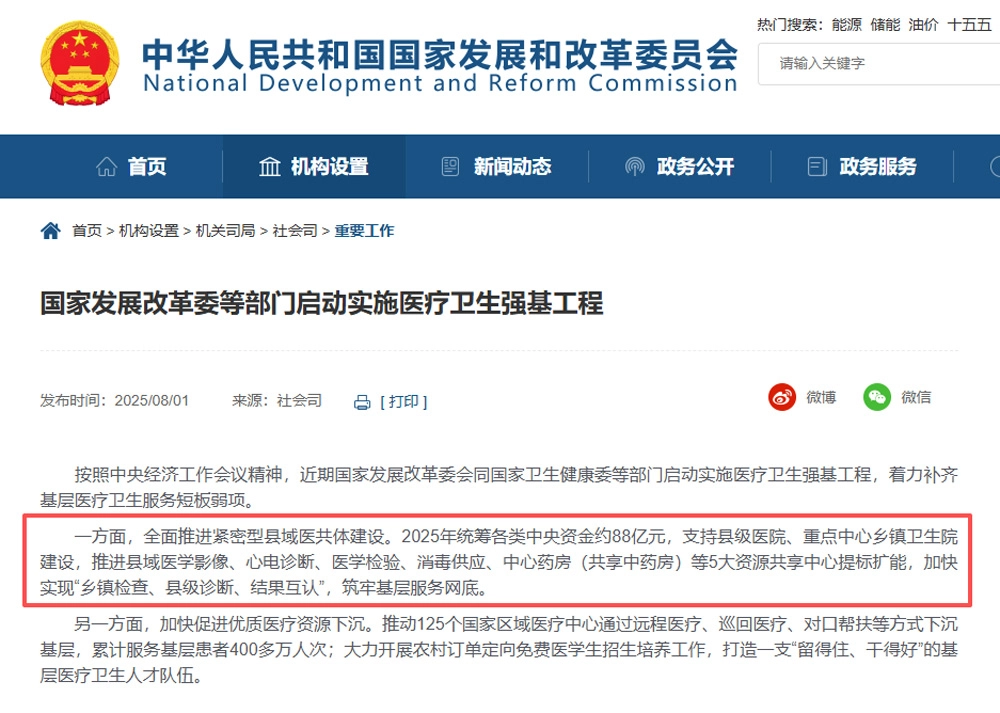
For the county-level healthcare institution capacity-building project, funding allocation demonstrates targeted precision: - Counties designated as national priorities for rural revitalisation receive 8 million yuan per county; - Counties in Tibet and Xinjiang that have achieved poverty alleviation receive 4 million yuan per county; - Other counties that have achieved poverty alleviation and underdeveloped counties in central and western regions receive 2 million yuan per county.
Of the above funds, 70% of the subsidy allocated to each county shall be directed towards county-level public hospitals, with each county supporting one such institution. The remaining 30% of the subsidy allocated to each county shall be directed towards primary healthcare institutions.
Empowered by Intelligence: Driving Solutions to Implementation
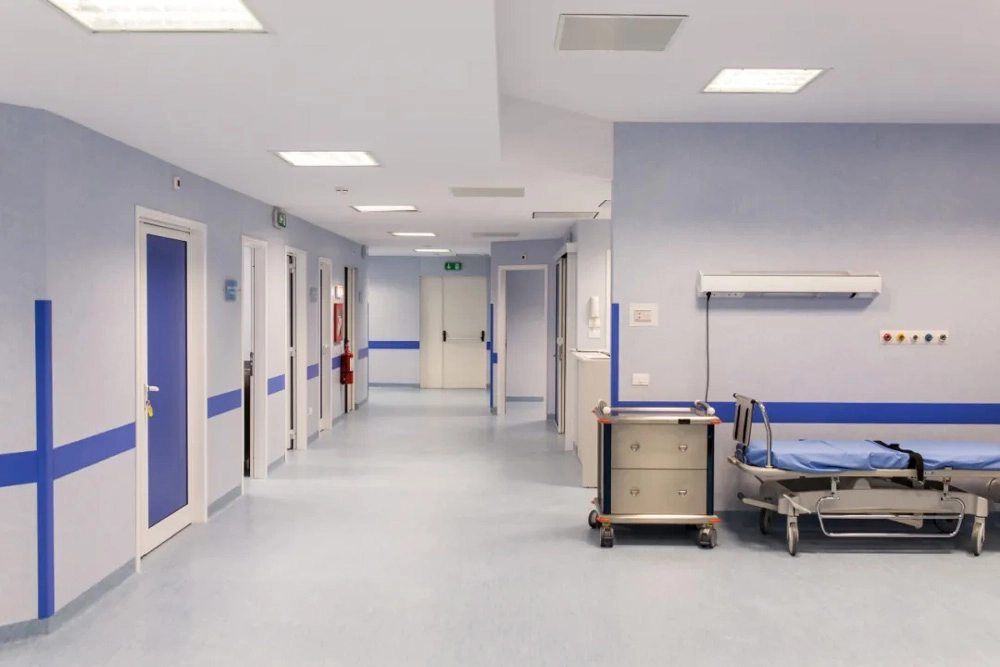
Under policy guidance, how can hospitals at all levels efficiently and effectively establish smart hospitals? Smart transformation is not merely an accumulation of technology, but rather involves process re-engineering, data-driven approaches, and experience optimisation to make healthcare services more precise, efficient, and human-centred—this represents a crucial leap in addressing the healthcare demands of an ageing population.
HuiShi, as a solution provider in the field of smart hospital construction, has maintained a service-oriented approach throughout its 16 years of industry expertise. Leveraging its in-house R&D capabilities, the company delivers bespoke, domestically developed smart hospital solutions tailored to regional variations and the distinctive cultural characteristics of each hospital.
Currently, Huishi has successfully implemented its solutions in several major hospitals across Beijing, Sichuan and other regions.
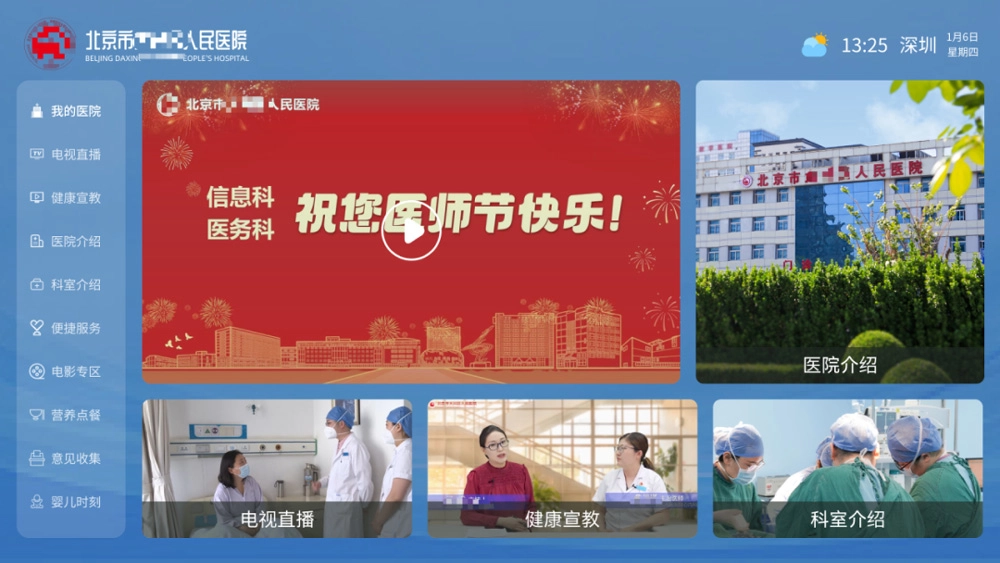
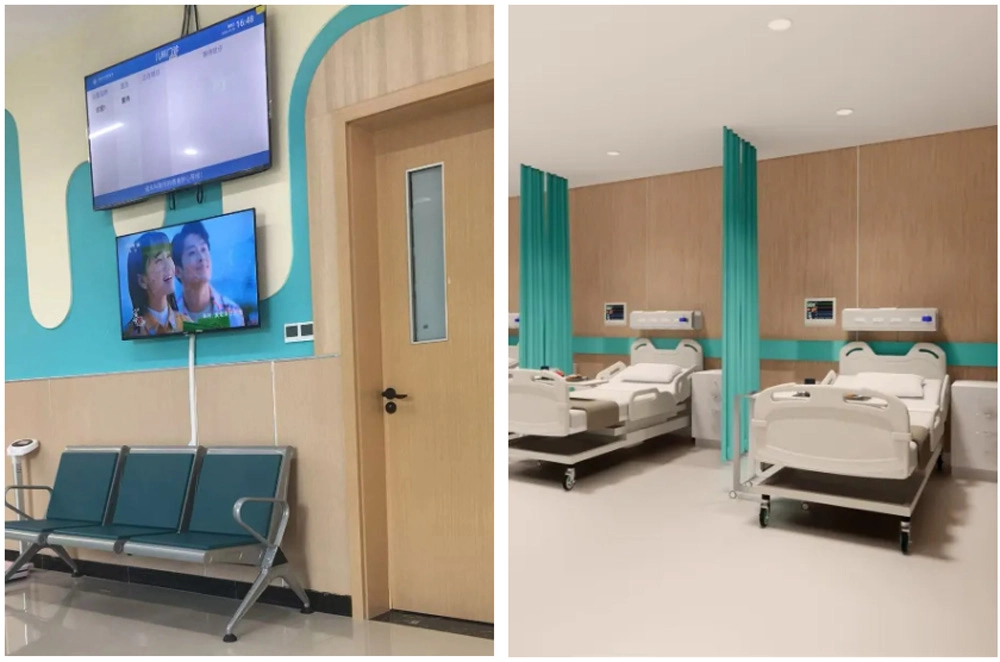
China's healthcare and pension security system is undergoing a systematic upgrade, transitioning from mere provision to excellence, and from basic coverage to high-quality care. With the combined efforts of policy initiatives and Huishi, every elderly person in China will be able to enjoy superior, more accessible, and dignified medical services.