In the past, a hospital’s core competitiveness was primarily reflected in its medical technology and specialist resources. However, with the widespread adoption of a ‘patient-centred’ service philosophy, patient experience is emerging as a new focal point of a hospital’s soft power. Particularly in inpatient settings, where patients spend extended periods of time and are in a psychologically sensitive state, they are highly attuned to service details; yet televisions in traditional wards often have limited functionality and struggle to meet the needs of modern patients. Against this backdrop, hospital IPTV systems have gradually evolved from being a ‘nice-to-have’ to a ‘key component’ in the development of smart hospitals.
The true value of IPTV systems
Many people still view hospital IPTV primarily as ‘internet television’, but a mature hospital IPTV system goes far beyond mere television functionality. It is a comprehensive service platform based on IP networks, integrating live TV, video-on-demand, information dissemination and doctor-patient interaction into a single device, enabling patients in their wards not only to ‘watch television’ but also to ‘engage with services’. For hospitals, this screen serves as a vital gateway for maintaining continuous engagement with patients and enhancing service efficiency.
The value of a hospital IPTV system is primarily evident in several areas:
● Enhancing the patient experience: Patients often experience anxiety and uncertainty during their hospital stay. By providing a wide range of entertainment content and health education videos, IPTV can help alleviate these feelings and improve the patient experience.
● Improving communication efficiency: The system enables the centralised dissemination of medication reminders, precautions and rehabilitation guidance, thereby reducing the need for healthcare staff to repeat information verbally and enhancing the standardisation and efficiency of information sharing.
● Service visualisation: Interactive features enable patients to participate in surveys and service evaluations, allowing hospitals to gain a clear understanding of service performance and achieve continuous improvement.
Features of the hospital’s IPTV system
A comprehensive hospital IPTV system typically offers the following features:
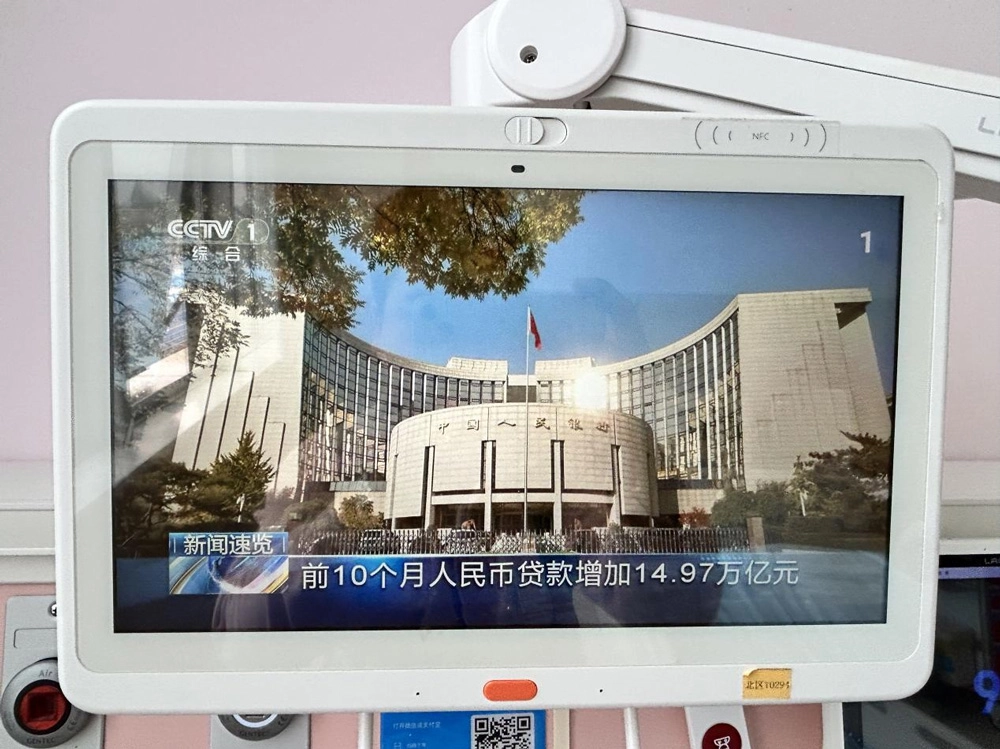
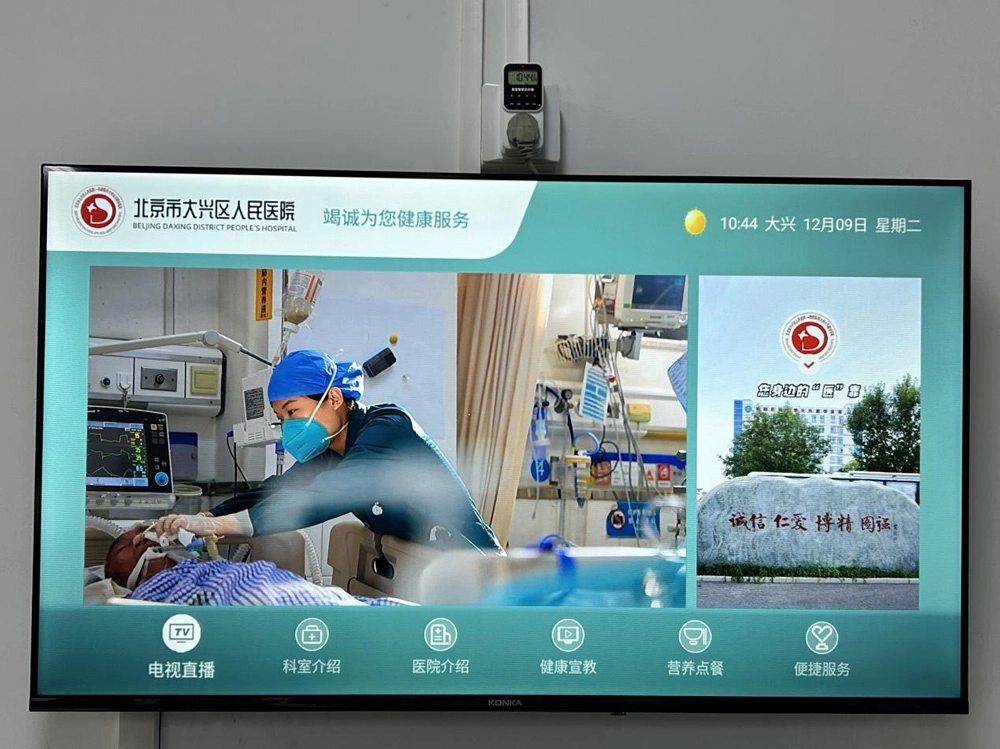
● Live and on-demand TV: Covering news, entertainment, education, health education and other content to meet patients’ leisure and learning needs.
● Information and Announcements: Hospitals can use IPTV to broadcast notices, patient guides and important reminders in a centralised manner, ensuring targeted communication.
● Interactive features: These include surveys, service evaluations and feedback forms, enabling patients to actively participate in the service process.
● Healthcare collaboration: Supports video conferencing, remote ward rounds and remote consultations, improving communication efficiency among healthcare professionals.
● Multilingual and personalised: Supports language switching for patients, offering welcome messages, personalised notifications and tailored content to enhance the user experience.
● Health education and rehabilitation guidance: video or interactive courses to help patients understand their condition, rehabilitation methods and medication precautions.
● Advertising and value-added services: Some hospitals can generate additional revenue by running advertisements or offering internal value-added services through the system.
Core capabilities: The key to the success of IPTV implementation
Although the feature lists offered by different manufacturers do not differ greatly, the actual user experience varies significantly. The key lies in their core capabilities:
● Reliable video services: Whether live streaming or on-demand, the service must run smoothly even under high concurrent traffic, avoiding buffering or interruptions.
● Targeted content distribution: Supports the distribution of content by department or ward to ensure targeted reach.
● Interactive features: functions such as surveys, service evaluations and doctor-patient interaction, designed to boost usage rates and engagement.
● Extensibility: Supports video conferencing for medical staff, remote consultations, and even integration with hospital information systems, thereby creating a comprehensive smart healthcare ecosystem.
● Reliable video services: Whether live streaming or on-demand, the service must run smoothly even under high concurrent traffic, avoiding buffering or interruptions.
Factors that are easily overlooked during selection
When selecting equipment, many hospitals focus too much on functionality and cost, whilst overlooking the key aspects of practical implementation:
● Deployment method: Whether it is necessary to replace the television or rewire the system has a direct impact on the budget and timeline. A well-developed solution should enable ‘minimal modification and rapid deployment’.
● System usability: Simple to operate and suitable for patients of all ages, particularly the elderly.
● Content and platform capabilities: Once launched, the platform will require ongoing management; centralised content management and publishing capabilities can reduce long-term maintenance costs.
● Security and service: In healthcare settings, data security is non-negotiable, whilst a vendor’s ability to provide ongoing support has a direct impact on system stability.
The Development and Implementation of an IPTV System
A successful hospital IPTV project is not simply a matter of installing software, but rather a comprehensive implementation process:
● Requirements analysis: Define the use cases, target audience and core features.
● System design and selection: Selecting the appropriate system based on the hospital’s specific circumstances.
● Deployment phase: Optimise the network environment and ensure compatibility with end-user devices to guarantee stable operation.
● Content preparation and training: Prepare information, entertainment and health education materials in advance, and train staff on how to use them.
● Continuous improvement: We gather feedback from patients and healthcare professionals to refine features and content, ensuring the system remains aligned with practical needs.
A hospital IPTV system is not merely a set of hardware devices; it represents an upgrade in service delivery. Its value lies not in the sheer number of features it offers, but in whether it is truly integrated into the hospital’s service processes. Only by selecting the right solution, implementing it effectively and optimising it continuously can the screens in patient wards truly become a ‘smart link’ between the hospital and its patients, enhancing the patient experience and optimising operational efficiency.