The rapid development of smart hospitals has made the application of information technology in healthcare services particularly important. As a key component of modern hospital IT infrastructure, the IPTV system in smart wards not only provides patients with a wealth of entertainment content, but also enhances the efficiency of healthcare staff and improves the patient experience. However, selecting a suitable IPTV supplier and ensuring the system operates effectively is a crucial task that every hospital’s IT department must address. This article provides a detailed, end-to-end guide to the selection, testing and acceptance of IPTV suppliers for smart wards in hospitals.
I. Understanding IPTV Systems
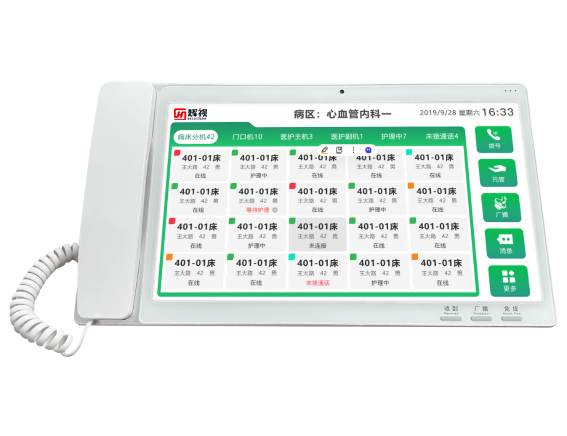
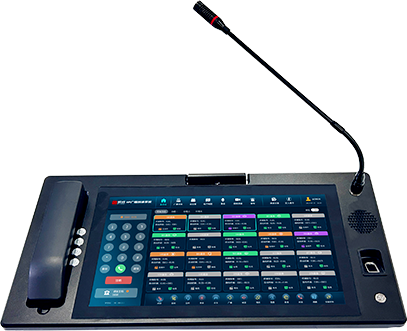
Hospital administrators need to have a comprehensive and precise understanding of IPTV systems designed specifically for healthcare settings. Unlike standard consumer IPTV, smart ward IPTV systems in hospitals place greater emphasis on medical suitability, information security and patient-centred service. Taking the Huishi Hospital IPTV system as an example, it is fully tailored to hospital operational contexts, moving beyond the single-purpose nature of traditional television entertainment to create an integrated platform combining ‘entertainment, medical services, in-hospital management and patient-centred care’. Its core functions address the needs of both medical staff and patients, and these are also the key criteria for hospitals when making their selection:
High-definition audiovisual entertainment: Supports 1080p HD live streaming, video on demand and time-shifted programme catch-up. Playback is smooth and picture quality is consistent, making it suitable for prolonged, uninterrupted use in hospital wards and effectively alleviating patients’ anxiety during their hospital stay.
Hospital-wide Information Dissemination: Supports the bulk publication and department-specific distribution of hospital announcements, patient guidance, specialist profiles, health education resources and post-operative rehabilitation information. It also features a scrolling ticker for emergency notifications across the entire network, meeting the hospital’s needs for both routine health education and emergency information dissemination.
In-depth interactive healthcare services: These services integrate seamlessly with core hospital systems such as HIS and LIS, enabling patients to view their fee statements, test results and medication records online, whilst also offering interactive services such as appointment booking, online consultations and service evaluations; some devices feature intelligent voice control, catering to the needs of elderly patients and those with limited mobility.
Human-centred Services and Empowerment of Healthcare Staff: Supports thoughtful services such as personalised start-up greetings, department-specific interfaces, remote visits and online consultations; it also enables the distribution of internal materials—including staff training resources, infection control protocols and clinical guidelines—to facilitate learning during short breaks for healthcare staff, thereby balancing patient care with hospital management requirements.
Once they have familiarised themselves with these features, the hospital’s IT department will be able to define its requirements more clearly, thereby laying the groundwork for the subsequent selection of suppliers.
II. Supplier Selection Criteria
Selecting the right IPTV system supplier is crucial to the successful implementation of a project, as it directly determines the system’s stability, compatibility and long-term user experience. Hospitals should conduct a comprehensive assessment across five key dimensions: industry experience, technical support, product performance, cost-effectiveness and implementation case studies. They may benchmark the core strengths of leading healthcare IPTV suppliers, such as Huishi, to establish a standardised selection framework:
1. The supplier’s extensive experience in the healthcare sector
Medical IPTV imposes far stricter requirements on data compliance, system compatibility and suitability for specific clinical scenarios than consumer-grade devices; prioritising suppliers with deep expertise in healthcare IT can effectively mitigate compatibility issues and compliance risks. Specialised medical IPTV suppliers, such as Huiwei, have long focused on hospital ward environments. They are well-versed in the construction regulations of the healthcare sector, infection control standards and the pain points in doctor-patient services. Their product development and feature updates are centred on the practical operational needs of hospitals, enabling them to provide highly tailored solutions that are superior to generic audio-visual equipment.
2. Technical support and after-sales service capabilities
As hospital ward IPTV systems must operate reliably 24 hours a day, 7 days a week, the supplier’s technical response and operational maintenance capabilities are key evaluation criteria. During the selection process, particular attention should be paid to service response times, localised operational and maintenance capabilities, and fault-handling mechanisms. Huishi has established a dedicated service team for healthcare projects, equipped with a standardised operational and maintenance system that provides round-the-clock technical support. This enables rapid remote troubleshooting, on-site emergency response, and regular inspections and upgrades, allowing for the efficient resolution of unexpected issues such as network fluctuations and system failures, thereby ensuring the uninterrupted and stable operation of the system.
3. Aligning product performance with scenario-based functionality
When selecting a system, one should avoid standard IPTV products that prioritise entertainment over medical needs, and instead focus on assessing system stability, suitability for medical functions, compatibility and ease of use. HuiShi Hospital IPTV serves as an excellent benchmark: playback devices feature low latency and run smoothly without stuttering, supporting high concurrent usage across multiple wards; the system can securely integrate with various in-hospital information systems, ensuring compliant data transmission; the user interface is simple and intuitive, suitable for patients of all ages, and its comprehensive functionality covers the four core scenarios of patient entertainment, medical services, hospital education and healthcare management.
4. Costs and Long-Term Investment Returns
When procuring systems, it is essential to take into account the full lifecycle costs of hardware, software, implementation, operation and maintenance, and upgrades, whilst avoiding the hidden costs associated with low-quality, low-price products, such as subsequent rectifications and frequent repairs. HuiShi IPTV employs a modular design, supporting on-demand configuration and flexible scalability, ensuring a manageable initial investment. The system boasts a low failure rate and low long-term operational and maintenance costs. At the same time, it optimises the patient experience and enhances patient satisfaction through digital services, delivering long-term service value and brand benefits to hospitals.
5. User Feedback and Case Studies
Real-world implementation cases are the key indicator of a product’s practicality. Hospitals should focus on reviewing the supplier’s completed projects and user feedback across public hospitals and specialist hospitals at all levels. Huishi IPTV has been successfully implemented in a large number of hospitals, primary care facilities and healthcare and wellness institutions nationwide, accumulating extensive experience in ward-based deployments. We can arrange on-site visits to review case studies and analyse outcomes, helping hospitals to intuitively assess the product’s suitability and mitigate selection risks.
III. Testing Process
Once a supplier has been selected, the next step is to carry out systematic testing to ensure that its functionality and performance meet the hospital’s pre-set standards.
1. System Functional Testing
On-demand programme testing: Testing the picture quality, smoothness and loading speed of the various videos and programmes available on the system.
Channel switching test: Check whether switching between live channels is smooth, and whether there is any stuttering or delay.
Interactive Function Testing: Testing the usability of interactive functions, such as booking appointments and checking information, carried out by patients using a remote control.
2. Network Performance Testing
The operation of the IPTV system relies primarily on the hospital’s internal network environment; therefore, comprehensive testing of network bandwidth, latency and packet loss rates is required to ensure that the system continues to operate stably even under high concurrent usage.
3. Emergency response testing
Establish a comprehensive emergency response mechanism to deal with unexpected technical faults. Verify the effectiveness of the supplier’s technical support and problem-solving mechanisms by simulating system failures.
III. Acceptance Process
Once the system has passed debugging and testing, a standardised acceptance process must be carried out in accordance with healthcare industry regulations. Drawing on Huishi’s proven project delivery framework, a traceable, comprehensive acceptance mechanism can be established to ensure the system meets regulatory requirements and is delivered reliably:
2. Item-by-item implementation and acceptance testing
Organise personnel from the technical, medical, and operations and maintenance teams to attend the site and carry out item-by-item verification against the acceptance checklist: conduct comprehensive testing of all core functions; retest the system’s stability under high-concurrency and network fluctuation scenarios; verify the security and accuracy of data integration, as well as details regarding equipment installation and interface adaptation; record test data throughout the process; and compile a complete acceptance log.
3. Rectification of Issues and Follow-up Testing
Functional defects, compatibility issues and performance shortcomings identified during acceptance testing shall be consolidated and clear deadlines and standards for rectification shall be established. In accordance with Huishi’s closed-loop delivery process, suppliers shall be urged to complete the rectifications, after which comprehensive retesting shall be carried out to ensure that all issues have been thoroughly resolved and the system fully meets the requirements.
4. Formal signing of the acceptance and handover documents
Once all projects have passed acceptance testing and the documentation is complete and accurate, both parties shall sign the formal acceptance and handover documents, setting out the detailed terms for subsequent warranty, operation and maintenance, and upgrade services, after which the system shall be formally put into routine clinical use.
5. Post-launch operation and maintenance, and ongoing upgrades and optimisation
Following system delivery, routine maintenance and iterative upgrades are key to ensuring long-term effectiveness. Hospitals may draw on Huishi’s long-term service model to establish a routine maintenance mechanism: the supplier carries out regular equipment inspections, vulnerability patches and system maintenance to ensure stable operation; in line with the hospital’s operational upgrades and policy updates, system functions, interfaces and compatibility modules are continuously optimised, whilst public education and entertainment resources are simultaneously updated, ensuring the IPTV system remains aligned with the evolving requirements of smart ward development.
The selection, testing and acceptance of IPTV systems for smart wards are crucial stages in the development of smart hospital information systems, directly determining the quality of ward services and the patient experience. When procuring and selecting such systems, hospitals should move away from a mindset focused solely on equipment procurement and instead prioritise suitability for clinical settings, system stability and long-term service provision, ensuring project quality through standardised screening, testing and acceptance procedures.
At the same time, by leveraging mature healthcare-specific solutions such as Huishi Hospital’s IPTV, and drawing on the company’s accumulated industry expertise and comprehensive service system, organisations can mitigate the risks associated with system selection and implementation. This enables the establishment of a smart ward audiovisual service system tailored to the needs of both medical staff and patients, thereby using digital technology to enhance the quality and standards of healthcare services.